

The question “How long does it take to get good at chess?” has no single answer. Progress in chess depends on time invested, study methods, playing frequency, and starting level. However, there are clear patterns. Most players follow a similar development path, and rating systems make it possible to estimate timelines with reasonable accuracy.
This guide explains what “good” means, how long it typically takes to reach different levels, and what factors affect improvement.
What Does “Good at Chess” Mean?
Before discussing time, the term “good” must be defined.
Chess strength is usually measured by rating. The most common systems are online ratings (like Chess.com or Lichess) and official ratings (FIDE or USCF).
Here is a general breakdown:
- Beginner: under 800
- Casual player: 800–1200
- Intermediate: 1200–1600
- Advanced club player: 1600–2000
- Expert: 2000–2200
- Master: 2200+
For most players, “good” means reaching around 1400–1800 online. At this level, players understand basic tactics, avoid simple blunders, and can follow opening principles.
Average Time to Reach Each Level
0 to 1000 Rating
For a complete beginner, reaching 1000 is usually the fastest stage.
- Time estimate: 1 to 3 months
- Practice: casual play and basic learning
At this stage, improvement comes from learning rules, piece coordination, and avoiding one-move mistakes. Most progress happens simply by playing regularly and reviewing games.
1000 to 1200 Rating
This is where players begin to stabilize.
- Time estimate: 2 to 6 months
- Focus: basic tactics and simple opening ideas
Players at this level start recognizing patterns like forks, pins, and skewers. They still miss tactics but less often. Many games are decided by blunders rather than long plans.
1200 to 1600 Rating
This is the first major plateau for many players.
- Time estimate: 6 months to 2 years
- Focus: tactics training, basic endgames, opening structure
Improvement slows down here because players must move beyond instinct. They need to calculate variations and understand positions.
Common requirements at this stage:
- Solve puzzles regularly
- Learn checkmate patterns
- Understand simple endgames (king and pawn, rook endings)
Many players stop improving here because they rely only on playing games without structured study.
1600 to 1800 Rating
Reaching this level requires more discipline.
- Time estimate: 1 to 3 years total from beginner
- Focus: calculation, positional understanding, consistency
Players begin to:
- Plan moves ahead
- Evaluate positions (material, structure, king safety)
- Reduce blunders significantly
Games become longer and more strategic. Players must study more than just tactics.
1800 to 2000 Rating
This is considered strong club level.
- Time estimate: 2 to 5 years total
- Focus: deeper calculation, opening preparation, advanced endgames
Progress slows further because:
- Opponents make fewer mistakes
- Small inaccuracies matter
- Knowledge gaps become more visible
At this level, players often study:
- Opening lines in more detail
- Model games from stronger players
- Complex endgames
2000+ Rating
Reaching expert or master level requires long-term effort.
- Time estimate: 5+ years for most players
- Many never reach this level
This stage requires:
- Consistent training
- High volume of games
- Deep understanding of strategy and calculation
Improvement becomes incremental. Gains may take months or years.
| Level | Rating Range | Typical Skill Description | Estimated Time to Reach |
|---|---|---|---|
| Beginner | Under 800 | Learns rules, frequent blunders, limited planning | 0–1 month |
| Basic Player | 800–1000 | Fewer blunders, recognizes simple tactics | 1–3 months |
| Casual Player | 1000–1200 | Understands basic ideas, inconsistent play | 3–6 months |
| Intermediate | 1200–1600 | Uses tactics, starts planning, studies basics | 6–24 months |
| Advanced Club Player | 1600–1800 | Calculates variations, fewer mistakes | 1–3 years |
| Strong Club Player | 1800–2000 | Solid strategy, consistent performance | 2–5 years |
| Expert | 2000–2200 | Deep understanding, strong calculation | 5+ years |
| Master | 2200+ | High-level play, extensive study and experience | Many years |
Factors That Affect Improvement Speed
1. Time Investment
The most important factor is how much time a player spends on chess.
- Casual players: 2–5 hours per week
- Serious learners: 10–20 hours per week
- Competitive players: 20+ hours per week
A player practicing 10 hours per week will improve much faster than someone playing occasionally.
2. Quality of Practice
Playing alone is not enough. Improvement depends on structured training.
Effective activities include:
- Solving tactics puzzles
- Reviewing games (especially losses)
- Studying endgames
- Learning opening principles
Passive activities, like watching videos without practice, have limited impact.
3. Feedback and Analysis
Players who analyze their games improve faster.
Key habits:
- Identify mistakes
- Understand why moves failed
- Avoid repeating the same errors
Using engines can help, but only if the player understands the explanations.
4. Age and Learning Style
Younger players often improve faster due to:
- More available time
- Higher pattern recognition speed
However, adults can still reach high levels with consistent effort.
Learning style also matters. Some players improve through puzzles, others through game analysis.
5. Playing Frequency
Regular play is necessary to apply knowledge.
- Playing daily leads to faster adaptation
- Long breaks slow progress
However, playing too many games without review can limit improvement.
Realistic Timelines
Based on common patterns:
- 3 months: reach 800–1000
- 6–12 months: reach 1200–1400
- 1–2 years: reach 1500–1700
- 2–4 years: reach 1800–2000
These estimates assume consistent practice. Without structured learning, progress can take much longer.
Why Progress Slows Over Time
Early improvement is fast because players fix obvious mistakes.
Later stages require:
- Deeper calculation
- Better decision-making
- Understanding complex positions
The difference between levels becomes smaller, but harder to achieve.
For example:
- Going from 800 to 1000 may take weeks
- Going from 1800 to 2000 may take years
Common Mistakes That Slow Progress
Playing Without Learning
Many players only play games. This leads to repeated mistakes.
Ignoring Endgames
Endgames are often decisive. Without this knowledge, players lose winning positions.
Memorizing Openings Without Understanding
Knowing moves is not enough. Players must understand ideas behind openings.
Not Reviewing Games
Without review, players do not identify patterns in their mistakes.
Fastest Way to Improve
A simple training structure can speed up progress:
- 40% tactics practice
- 30% playing games
- 20% game review
- 10% endgames and openings
This balance ensures both skill development and practical experience.
Can You Get Good Quickly?
Short-term improvement is possible, but long-term strength takes time.
In 3–6 months:
- A beginner can become a solid casual player
In 1–2 years:
- A player can reach intermediate level
Reaching advanced levels requires sustained effort over several years.
FAQ: How Long Does It Take to Get Good at Chess?
1. How long does it take to become a decent chess player?
Most players reach a “decent” level (around 1200–1400 online) in 6 to 12 months with regular practice. This assumes consistent play, basic tactics training, and some game review.
2. Can I get good at chess in 3 months?
Yes, but only to a basic level. In 3 months, a beginner can usually reach 800–1000 if they play frequently and learn simple tactics. Reaching intermediate level takes longer.
3. What is the fastest way to improve in chess?
The most efficient method combines:
- Tactics training (daily puzzles)
- Playing games
- Reviewing mistakes
- Learning basic endgames
Players who skip game analysis tend to improve more slowly.
4. How many hours per day should I study chess?
There is no fixed number, but common patterns are:
- Casual improvement: 30–60 minutes per day
- Faster improvement: 1–3 hours per day
Consistency matters more than long sessions.
5. Why do many players get stuck around 1200–1400?
This is a common plateau because:
- Opponents make fewer simple mistakes
- Players rely on intuition instead of calculation
- Lack of structured study becomes a limitation
Improvement beyond this point requires deliberate practice.
6. Is it harder to improve after 1600?
Yes. Progress slows because:
- Mistakes are smaller and harder to detect
- Games require planning and calculation
- Opponents punish inaccuracies more consistently
Each rating gain requires more effort than before.
7. Can adults become strong chess players?
Yes. Adults can reach 1600–2000 with consistent effort. However, improvement may be slower compared to younger players due to time constraints and learning speed.
8. Do I need to memorize openings to get good?
No. At beginner and intermediate levels, understanding opening principles is more important than memorization. Deep opening study becomes useful at higher levels.
9. How many games should I play per week?
A practical range is:
- 10–20 rapid games per week for active improvement
Quality matters more than quantity. Reviewing games is essential.
10. What rating is considered “good” in chess?
For most players:
- 1200–1400: decent
- 1400–1800: good
- 1800+: strong
The definition depends on context, but these ranges are widely accepted.
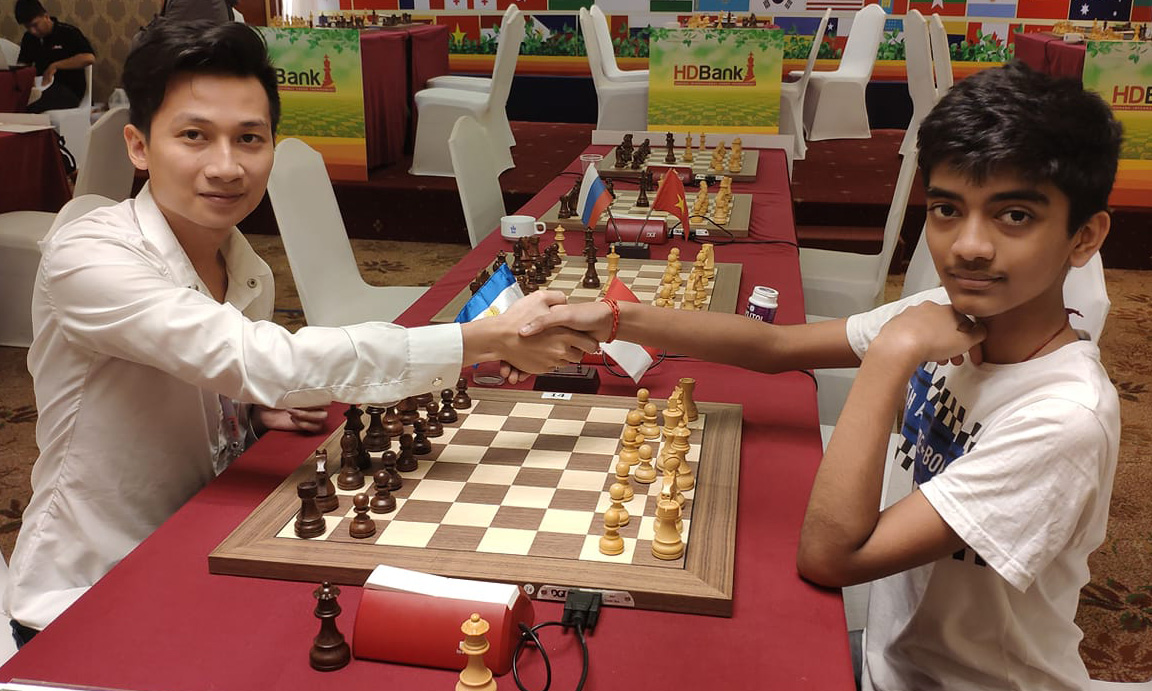
I’m Xuan Binh, the founder of Attacking Chess, and the Deputy Head of Communications at the Vietnam Chess Federation (VCF). My chess.com and lichess rating is above 2300. Send me a challenge or message via Lichess. Follow me on Twitter (X) or Facebook.