
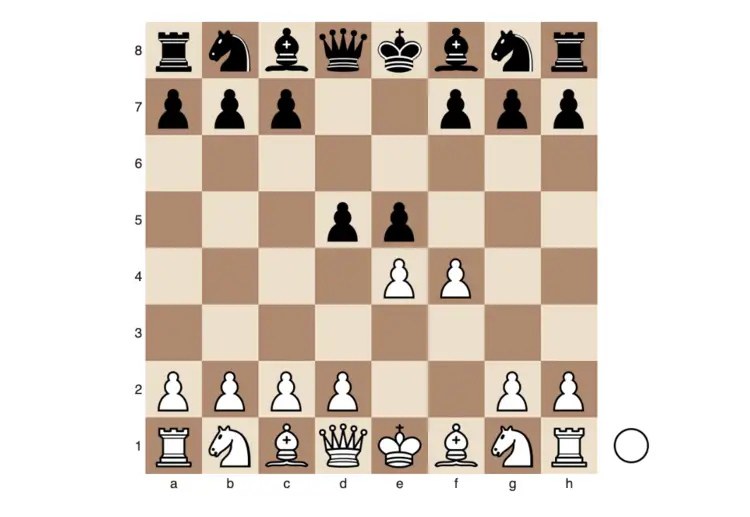
The Falkbeer Countergambit (1.e4 e5 2.f4 d5) is one of the most historically significant and theoretically rich responses to the King’s Gambit. For nearly two centuries, it has represented the “principled” way to decline White’s offer of a wing pawn, by striking back immediately in the center. While its popularity has waned at the super-Grandmaster level in recent decades, it remains a dangerous weapon in practical play, often leading to sharp, unbalanced positions where the better-prepared player holds a massive advantage.
In his comprehensive guide, we provides an exhaustive look at the refutation of the Falkbeer’s most aggressive attempts and offers a roadmap for White to secure a stable positional edge.
The Spirit of the Countergambit
The opening sequence 1.e4 e5 2.f4 d5 3.exd5 e4 defines the Falkbeer. By pushing the e-pawn to e4, Black creates a “hook” in White’s position, obstructing the natural development of the knight to f3 and claiming space in the center. White’s primary task is to undermine this advanced pawn while catching up in development.
The Falkbeer requires White to be more than a “one-dimensional hacker.” To find an advantage, White must often be willing to navigate queenless middlegames and technical endgames where his superior pawn structure and minor piece coordination eventually tell.
Part 1: Early Deviations and Move 4 Options
White’s most respected response is 4.d3, but other moves exist.
4.Nc3
This has been played by legends like Steinitz, Spassky, and Fischer. However, it is considered less testing than 4.d3. After 4…Nf6 5.Qe2, Black has the disruptive 5…Bb4, which can lead to complex lines.
A famous game, Schulten – Morphy (1857), saw White collapsed after 6.Bd2 e3! 7.Bxe3 0-0. Black’s lead in development in these lines often compensates for the sacrificed pawn.
4.d3: The Main Road
After 4.d3 Nf6, White must choose how to resolve the tension on e4.
- 4…Qxd5?!: This is considered inferior. After 5.Nc3 Bb4 6.Bd2 Bxc3 7.Bxc3, White gains the bishop pair and a stable edge.
- 4…exd3: Helping White develop is rarely the right idea. After 5.Bxd3 Nf6 6.c4, White remains a healthy pawn up with centralized pieces.
The main line proceeds: 4.d3 Nf6 5.dxe4 Nxe4. Now White reaches the critical crossroads of the variation.
Part 2: The Traditional Main Line (6.Be3)
For many years, 6.Be3 was the standard recommendation for White. It is a solid move that prepares development while challenging Black’s centralized knight.
6.Be3 Bd6 This is the superior response for Black. Black prepares to castle and targets the f4-square.
- The 6…Qh4+?! Trap: Many amateur players fall for this tempting check. After 7.g3 Nxg3 8.Nf3!, White initiates a powerful exchange sacrifice. 8.hxg3? was Tal’s mistake in a game against Trifunovic, but the modern 8.Nf3 is devastating.
- The Queenless Ending: If Black plays 8…Qe7 9.hxg3 Qxe3+ 10.Qe2, we reach an endgame where White is better despite Black having the bishop pair. White’s lead in development and the pressure along the h-file (which developed the rook for free) are the deciding factors.
In Shaw – Allahverdiev (1994), we reached this ending but misplayed it due to illness, yet his analysis proves White retains a “stable advantage” if he keeps the pieces coordinated and uses the h-file rook effectively.
Part 3: The Modern Refutation (6.Nf3!)
We strongly recommends 6.Nf3! as the most testing line against the Falkbeer. By developing the knight first, White keeps maximum flexibility.
The Main Line: 6…Bc5
This is Black’s most aggressive and popular try. 7.Qe2! This is the key move, pinning the knight on e4 and forcing Black to defend it awkwardly.
- 7…Bf2+?: This old line is now considered a blunder. After 8.Kd1 Qxd5+ 9.Nfd2! f5 10.Nc3, the black king is actually the one in danger, and White wins material by force.
- 7…Bf5 8.Nc3 Qe7: This leads to a massive struggle. White’s best path involves 9.Be3! Bxe3 10.Qxe3 Nxc3 11.Qxe7+ Kxe7 12.bxc3.
ENDGAME ANALYSIS: We reach a queenless middlegame where White has a 4-3 pawn majority on the queenside. White’s bishops are generally more functional here. In Cheglakov – Salygo (1981), White demonstrated that the extra d-pawns control the center while Black’s f-pawns are “less influential”.
Sideline A: 6…Be7!?
A subtle move favored by players like Boris Alterman. Black avoids the immediate pin on the e-file and prepares for a more maneuvering battle.
Sideline B: 6…c6!?
This is an attempt to blow the position open before White can consolidate. However, after 7.Bd3!, White develops while maintaining the extra pawn. Black often struggles to find full compensation for the material.
Part 4: Detailed Analysis of 6.Nf3 Bc5
To understand why 6.Nf3 is so effective, we must look at the specific tactical precision required.
Line: 1.e4 e5 2.f4 d5 3.exd5 e4 4.d3 Nf6 5.dxe4 Nxe4 6.Nf3 Bc5 7.Qe2 Bf5 8.Nc3 Qe7
White has a choice here. We prefers 9.Be3, but 9.g4!? is a “ropey move with a famous history” that can be used for shock value.
The 9.Be3 Line: 9.Be3 Bxe3 10.Qxe3 Nxc3 11.Qxe7+ Kxe7 12.bxc3 White has achieved his strategic goal: an endgame where he is slightly better with zero risk. Black’s doubled f-pawns are not yet a threat, and White’s bishops are ready to dominate.
Endgame Strategy for White:
- Move the king to safety: Usually to d2 or f2.
- Challenge Black’s active pieces: Use the rooks on the d- and e-files.
- Advance the queenside majority: The c-pawns and a-pawn can become a “steamroller” in the long term.
Part 5: Historical Context – The Deathbed of the King’s Gambit?
The Falkbeer was once thought to be the final nail in the coffin for 2.f4. The most famous example of this was Spielmann – Tarrasch (1923). Spielmann played an aggressive line with 8.g4?, was crushed by Tarrasch’s clinical defense, and subsequently wrote an article titled “From the Deathbed of the King’s Gambit”.
However, modern analysis—as presented in the sources—shows that Spielmann’s despair was premature. The error was not in the King’s Gambit itself, but in the reckless choice of 8.g4. By playing 8.Nc3! instead, White maintains a solid plus. The “Deathbed” of the opening turned out to be merely a “long nap,” as White has found new ways to handle the Falkbeer with positional rigor.
Strategic Summary for White
- Prioritize Development: In the Falkbeer, Black is the one trying to gain time. White must respond by bringing pieces out efficiently. Nc3 and Be3 are the cornerstones of this approach.
- Don’t Fear the Queen Exchange: Many King’s Gambit players want a mating attack. In the Falkbeer, your advantage is often structural. A queen exchange into an endgame with a central pawn majority is often a winning recipe for White.
- Neutralize the h4-Bishop: If Black plays 4…Bb4 or …Bh4+, be prepared to move your king or block with g3 only if the tactical consequences are calculated deeply (as in the 6.Be3 main line).
- The c4 Outpost: In many lines where Black plays …b5, White can use the a2-a4 push to create an outpost for the bishop on c4, which can be an “enduring endgame edge”.
Conclusion
The Falkbeer Countergambit remains a fascinating chapter in chess theory. While Black’s strike at the center is conceptually sound, White’s modern treatment, focusing on 6.Nf3! and the subsequent structural advantages, has rendered the opening nearly a “forced plus” for the first player.
For the White player, the Falkbeer is an opportunity to prove that the King’s Gambit is not just for wild attackers, but for those who understand the deep positional value of a powerful center and coordinated minor pieces. If you follow the lines, you can enter the battle with confidence, knowing that the “Deathbed” of the King’s Gambit is actually a position of strength for the well-prepared strategist.
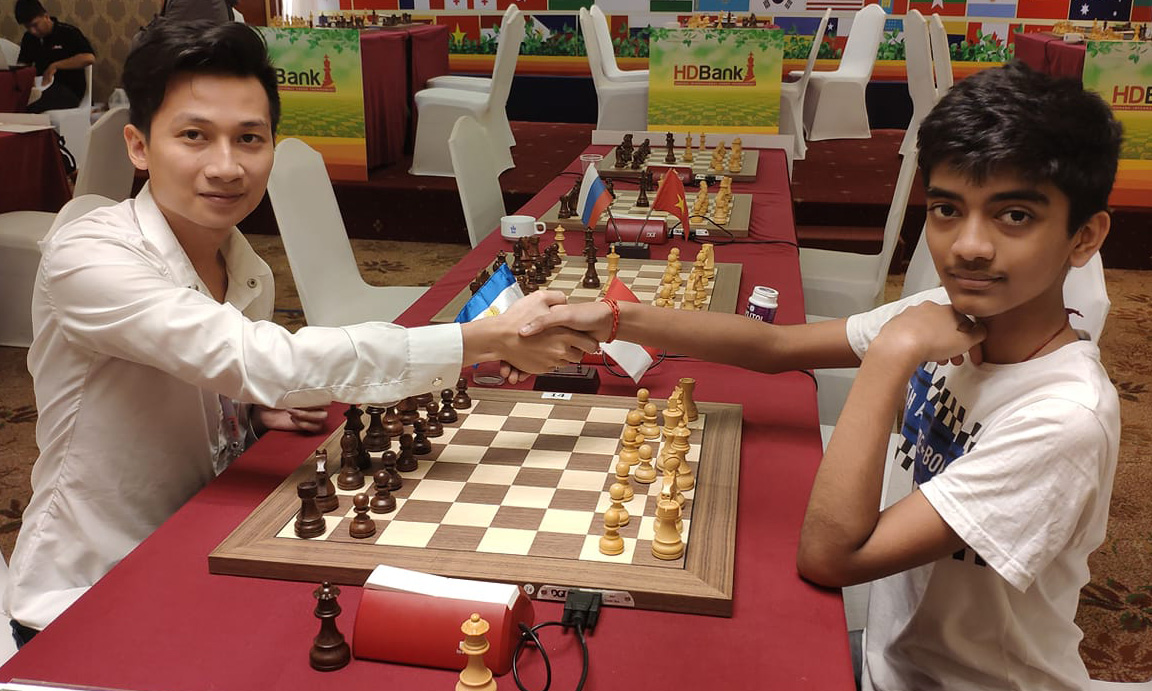
I’m Xuan Binh, the founder of Attacking Chess, and the Deputy Head of Communications at the Vietnam Chess Federation (VCF). My chess.com and lichess rating is above 2300. Send me a challenge or message via Lichess. Follow me on Twitter (X) or Facebook.