

Many players are drawn to the razor-sharp lines of the Sicilian or the deep complexities of the Ruy Lopez. However, there is a profound, structural beauty in the Philidor Defense, defined by the moves 1.e4 e5 2.Nf3 d6. Named after the legendary 18th-century master and composer André Danican Philidor, this opening remains a testament to his most famous maxim: “Pawns are the soul of chess”.
While it was once dismissed by elite players as an antiquated and passive system, the Philidor has undergone a modern reinvigoration. Today, it is recognized as an exceptionally solid “strongpoint” defense used by grandmasters like Michael Adams and Zurab Azmaiparashvili to frustrate even the best-prepared opponents.
Table of Contents
The Philosophy of the Strongpoint
The Philidor Defense is fundamentally a choice of solidity over immediate piece mobility. By playing 2…d6, Black creates a rock-solid center and immediately protects the e5-pawn, which is often under fire in other King’s Pawn openings.
However, this structural integrity comes with a known positional cost. The move 2…d6 blocks the dark-squared bishop on the a3-f8 diagonal, often leaving Black with a cramped position in the early stages of the game. This “passive but solid” reputation is what led earlier generations to view it as inferior, but modern analysis suggests that if Black can weather the initial space disadvantage, the resulting positions are often “dynamically balanced” or even perfectly equal.
Historical Context and Evolution
André Philidor originally advocated for 2…d6 as a means to prepare the aggressive pawn thrust 3…f5. In the Romantic era of chess, such gambits were common, but modern theory has shown that the f5 push can be risky, often allowing White a slight but persistent advantage.
The opening’s true survival is due to its adoption by the legendary Tigran Petrosian, World Champion from 1963 to 1969, who utilized the Philidor’s defensive resilience to dismantle his opponents’ attacks. Petrosian recognized that while Black surrenders some space, they maintain a compact structure and an open file aiming at White’s 4th-rank pawn, which can be leveraged in the middlegame.
The Critical Juncture: White Plays 3.d4
Almost universally, White responds with 3.d4 to immediately challenge Black’s center and claim a space advantage. From this point, the game typically branches into two main strategic paths for Black.
1. The Exchange Variation (3…exd4)
In this line, Black chooses to surrender the center to gain active piece play. After 4.Nxd4 Nf6 5.Nc3 Be7, the position often leads to opposite-side castling, where White attacks on the kingside and Black seeks counterplay on the queenside.
- White’s Plan: Utilize the space advantage in the center to launch a kingside assault or focus pressure on the backward d6-pawn.
- Black’s Plan: Develop queenside pieces rapidly and expand with moves like …a6 and …b5, aiming to open lines against White’s castled king.
Watson notes that this variation can be “tricky,” and Black must be careful not to allow White to gain a “killing position” through superior development.
2. The Nimzowitsch Variation (3…Nf6)
Named after the influential hypermodern theorist Aron Nimzowitsch, this variation leaves the e5-pawn in place. It often leads to a more restrained, technical battle where Black aims to undermine White’s center rather than trading it away.
The Modern “Hanham” Move Order
One of the most significant developments in Philidor theory is the realization that move order is everything. To reach the “Strongpoint” or Hanham Variation—where Black keeps a pawn on e5 supported by a knight on d7—many players avoid starting with 1.e4 e5.
Instead, they use the 1…d6 move order. This allows Black to transition into the Philidor through a sequence like 1.e4 d6 2.d4 Nf6 3.Nc3 e5 4.Nf3 Nbd7. By using this “Universal First Move,” Black bypasses several aggressive White options, such as early bishop sorties to c4. In this Hanham structure, Black’s position is a fortress; while it looks passive, it is “secondary nature” for experienced players to wait for the right moment to strike back.
Key Middlegame Themes
Once the opening phase concludes, the Philidor Defense typically results in specific pawn structures that dictate the flow of the game:
- Light-Square Restraint: Black often employs structures with …c6 and …e6 to restrain White’s d-pawn. This “restraint center” function is common in many semi-open games and is a hallmark of defensive proficiency.
- The “Good” Knight vs. “Bad” Bishop: If pieces are traded off, White often strives for a “good knight vs. bad bishop” endgame, where White exploits the fact that Black’s bishop is restricted by its own pawns on d6 and e5.
- Space vs. Compactness: White generally enjoys more space, but Black’s position has fewer “holes” or targets, making it difficult for White to find a decisive breakthrough without taking significant risks.
Why Play the Philidor Defense Today?
For the club player or the aspiring master, the Philidor offers several unique advantages:
- Surprise Factor: Most players at lower levels spend their time studying how to crush the Sicilian. Facing a stone-cold Philidor can be psychologically draining and force White into unfamiliar territory.
- Structural Reliability: Unlike gambits or sharp tactical systems, the Philidor is based on durable positional principles. It is very difficult to “bust” a well-played Philidor early in the game.
- Efficiency of Study: Because the Philidor often relies on a “system” (especially the Hanham Variation), players can learn the key strategic ideas rather than memorizing thousands of forced tactical variations.
- Excellent for Counter-Punchers: The Philidor is perfect for players who enjoy defending solidly and waiting for their opponent to overextend in their search for an advantage.
Conclusion: A Fortress for the Strategic Mind
The Philidor Defense is a rich, often misunderstood opening that embodies the classic struggle between space and structure. While it may require patience and a willingness to play with less territory, its solidity is undeniable. As modern grandmasters have proven, when handled with precision, the Philidor is not merely a way to survive with Black—it is a way to thrive through structural integrity.
Whether you are looking to emulate the legendary defense of Tigran Petrosian or simply want a reliable weapon to meet 1.e4, the Philidor Defense remains one of the most instructive and resilient systems in the game of chess. By mastering its “strongpoint” philosophy, you can ensure that your games are built on a foundation that André Philidor himself would have admired.
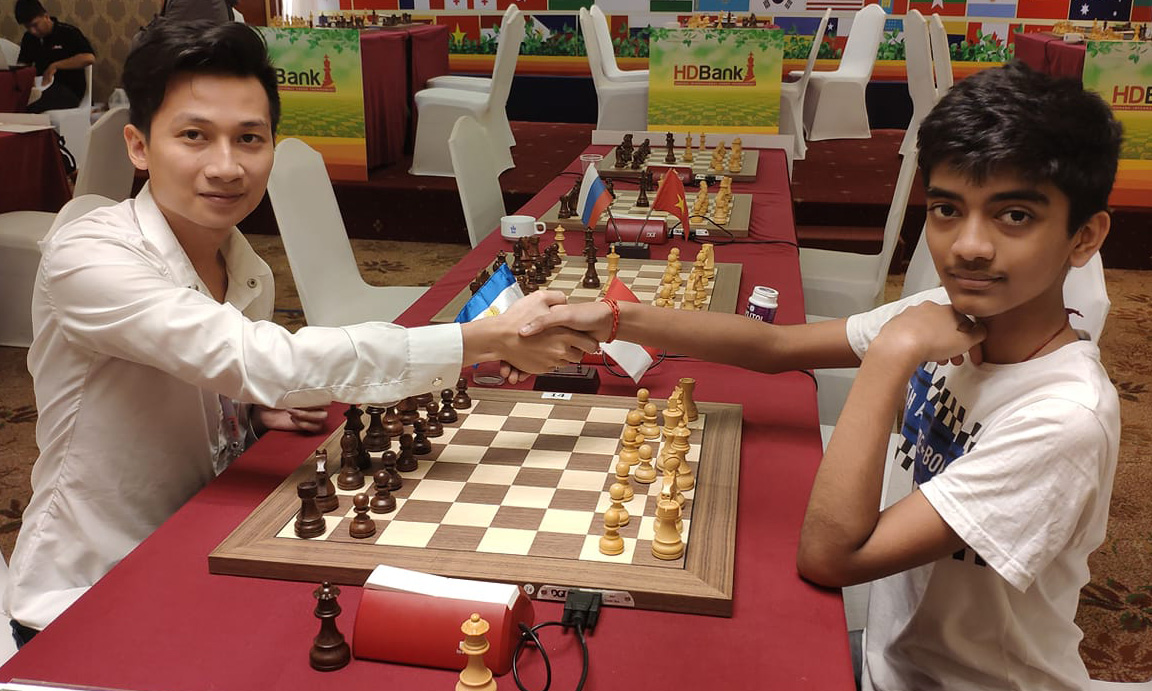
I’m Xuan Binh, the founder of Attacking Chess, and the Deputy Head of Communications at the Vietnam Chess Federation (VCF). My chess.com and lichess rating is above 2300. Send me a challenge or message via Lichess. Follow me on Twitter (X) or Facebook.