
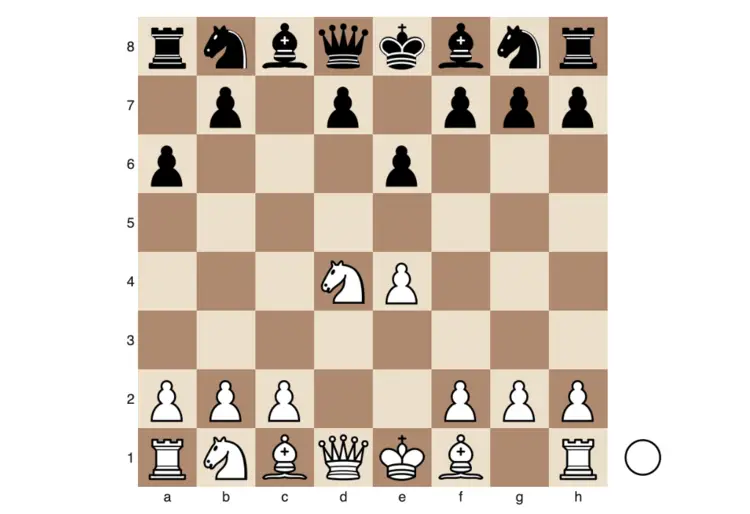
Welcome to the ultimate guide to the Sicilian Kan (1. e4 c5 2. Nf3 e6 3. d4 cxd4 4. Nxd4 a6). If you are looking for an opening that balances flexibility, simplicity, and counter-attacking potential, you have found it. Unlike the Najdorf or the Dragon, which require memorizing twenty-plus moves of engine-perfect theory just to survive, the Kan is a “system” opening. In the Kan, Black waits for White to commit their pieces before deciding on a defensive setup, often leading to a rich “Hedgehog” structure or sharp counter-attacks in the center.
In this guide, we will break down the repertoire into strategic themes, move orders, and specific lines for both club players and aspiring masters, drawing from the deep analysis of Grandmaster John Emms and NM Daniel He.
Table of Contents
Why Play the Sicilian Kan?
The Sicilian Kan is one of the most elastic variations of the Sicilian complex. Its primary virtues are:
- Low Theoretical Onus: You aren’t forced to absorb massive chunks of opening knowledge.
- Information Advantage: By playing 4… a6, Black waits to see White’s setup before committing their minor pieces.
- Flexibility: It can transpose into the Taimanov, the Scheveningen, or the Paulsen, depending on Black’s needs.
- The “Flummox” Factor: Even experienced White players are often confused by Black’s non-standard development, frequently slumping into deep thought as early as move six.
Dealing with Early Sidelines
Before we reach the main lines of the Open Sicilian, White may try to dodge your preparation with sidelines.
1. The Alapin Variation (2. c3)
White aims for a solid pawn center but blocks the natural development of the c3 knight.
- The Repertoire Choice: 2… e6 3. d4 d5!.
- Main Line: 4. exd5 exd5 5. Nf3 Nc6 6. Bb5 Bd6 7. dxc5 Bxc5 8. 0-0 Ne7 9. Re1 0-0 10. Bg5 f6 11. Bf4 Qb6!.
- Insight: Always look for …Qb6 in these structures to create a double attack on the bishop and the f2-pawn.
2. The Closed Sicilian (2. Nc3)
- The Repertoire Choice: 2… a6! This strikes back on the queenside immediately.
- If 3. f4: 3… b5 4. Nf3 Bb7 5. d3 e6 6. g3 d5!.
- The “h5” Idea: If White plays 7. e5, Black should respond with 7… h5!, preparing to bring the knight to the weakened f5 square via g8-h6-f5.
3. The McDonnell and Bowdler Attacks
- 2. f4 e6 3. Nf3 d5 4. e5 Nc6 leads to a favorable French-style structure.
- 2. Bc4?! e6 3. Nc3 a6. Against the Kan, the bishop on c4 is “just plain bad” because the a2-g8 diagonal is already closed by Black’s e6 pawn.
The Main Line Battle — 5. Bd3
The move 5. Bd3 is the most popular choice for White, prioritizing development and piece flexibility.
1. The Classical Approach: 5… Nf6 6. 0-0 Qc7
This is the “main line” of the Kan. Black takes control of the e5 square and prepares for the Hedgehog.
The Maroczy Bind & Hedgehog (7. Qe2 d6 8. c4)
White establishes the Maroczy Bind (pawns on c4 and e4) to clamp down on the d5 and b5 breaks.
- Black’s Best Response: 8… g6!.
- The Setup: 9. Nc3 Bg7 10. Rd1 0-0 11. Nf3 Nc6 12. h3 b6 13. Be3 Nd7.
- Strategic Motifs: Black’s Hedgehog structure (e6, d6, b6, a6) is notoriously difficult to break down. White must be extremely careful not to overextend, or they will be “impaled on one of the Hedgehog’s spikes”.
- The Almasi-Anand line: 13… Nd7 14. Rac1 Bb7 15. Bb1 Rab8 16. Qd2. White tries to trade dark-squared bishops with Bh6 to exploit Black’s kingside weaknesses.
The Aggressive 10. f4
If White lunges for the kingside:
- 10. f4 0-0 11. Nf3 b6 12. Bd2 Bb7 13. Rac1 Nbd7 14. b4 Rac8 15. Qf2 Qb8 16. Qh4 b5!.
- Counter-Strike: Black ignores the kingside build-up and strikes on the queenside. After 17. cxb5 axb5 18. Bxb5? Bxe4! Black takes over the center.
2. The Flexible Modern Line: 5… Bc5!
This move, championed by players like NM Daniel He, forces the White knight to an inferior square immediately.
- 6. Nb3 Be7! (or 6… Ba7).
- If 7. Qg4: This is the critical test. Black plays 7… g6! to provoke weaknesses, then 8. Qe2 d6 9. 0-0 Nd7 10. Nc3 Qc7.
- The Trap: If White plays too aggressively with an early f4-f5: 11. f4 Ngf6 12. f5 gxf5 13. exf5 e5!. Although Black cannot castle, the king is safe in the center because the center is closed, and Black gains the open g-file for an attack.
The Tactical Front — 5. Nc3
When White plays 5. Nc3, they are often aiming for a faster, Scheveningen-style structure.
1. The Standard 5… Qc7 6. Bd3 Nf6 7. 0-0
From here, Black has several plans.
- The “h5” Attack:7… Nc6 8. Be3 h5!
- This is a signature NM Daniel He recommendation. The idea is to play …Ng4, threatening the bishop on e3 and mate on h2.
- Example Trap: 9. f4?? Ng4! 10. Qf3 Nxe3 11. Qxe3 Nxd4 12. Qxd4 Bc5. White’s queen is pinned and lost!.
2. The Sharp 6… b5 Variation
This is high-risk, high-reward.
- The “Nxc6” Line: 7. 0-0 Nc6 8. Nxc6 dxc6!.
- Strategy: Black recaptures with the d-pawn to facilitate …e5. 9. f4 e5! 10. f5 c5 11. Be3 Bb7.
- The Plan: Black can play for a kingside attack with h5 or queenside expansion with c4.
The Modern Masterpiece — 6… Qb6!?
One of the most significant theoretical developments in the last decade is 5. Nc3 b5 6. Bd3 Qb6!?. This move targets the d4 knight before White can castle.
- White’s Main Try: 7. Be3 Bc5 8. Be2 Nc6 9. Nxc6 dxc6!.
- The Endgame Squeeze: After 10. Bxc5 Qxc5 11. Qd3 Nf6 12. 0-0-0 0-0 13. f4 e5! 14. f5 a5!.
- The Gallagher Novelty: White can try the wild 8. Qg4!?. Black should respond with 8… Bxd4 9. e5 Bxe3 10. Qxg7 Bxf2+ 11. Kf1 Bh4 12. g3 Qe3!!. This leads to insane complications where Black’s three minor pieces often outweigh White’s queen.
Mastering the Maroczy Bind (5. c4)
White players who hate the tactical chaos of the Sicilian often retreat to the Maroczy Bind (5. c4).
- The Setup: 5. c4 Nf6 6. Nc3 Bb4!.
- The Key Maneuver: By pinning the knight, Black threatens to wreck White’s pawn structure.
- Main Line: 7. Bd3 Nc6 8. Nxc6 dxc6 9. e5 Qd4!.
- This leads to a tactical sequence: 10. exf6 Bxc3+ 11. bxc3 Qxc3+ 12. Bd2 Qxd3 13. fxg7 Rg8 14. Bh6 Qc3+ 15. Kf1 Qf6.
- Assessment: Despite the material imbalances, Black’s control of the dark squares around White’s king often provides a draw by perpetual check or a dangerous endgame advantage.
Key Strategic Motifs and Advice
1. The Power of …h5
Don’t be afraid to push the h-pawn. In many Kan lines, especially after White plays f4, the h5-h4 push creates targets on g3 and facilitates a knight jump to g4.
2. The …Bxc3 Exchange
Exchanging your dark-squared bishop for White’s knight on c3 is a common theme to double White’s c-pawns. In the resulting endgame, Black often has a structural advantage because White’s doubled pawns are hard to defend and easy to block with a knight on c5.
3. Central Breaks
Success in the Kan depends on timing the …d5 or …e5 breaks. In the Hedgehog, the …b5 break is just as important, often opening lines for the b7-bishop and the a8-rook.
4. Castling is Optional
Black can often delay castling because the center remains closed. The king is surprisingly safe on e8 or d8 behind the solid e6/d6 pawn wall.
Common Traps to Remember
Trap #1: The e5 Check
5. Bd3 Nf6 6. e5? Qa5+! winning the e5 pawn.
Trap #2: The Ng4 Skewer
In lines with 6. Be3 Nf6 7. f3? Bb4 8. Qd2 d5! 9. Bd3? e5!. White loses a piece due to the fork/pin on the d4 knight.
Trap #3: The Queen Pin
7. 0-0 Nc6 8. Be3 h5 9. f4?? Ng4 10. Qf3 Nxe3 11. Qxe3 Nxd4 12. Qxd4 Bc5! pinning the queen to the king.
Conclusion: The Kan Repertoire in Your Pocket
The Sicilian Kan is a fighting repertoire for the intelligent player. By prioritizing positional understanding over move-by-move memorization, you can outplay opponents who are more used to the “trendy” lines of the Open Sicilian.
Whether you choose the classical 5… Nf6, the flexible 5… Bc5, or the hyper-modern 6… Qb6, the Kan provides you with a robust, sound, and exciting weapon against 1. e4. Success in the Kan is about understanding the spirit of the system. Now, take these lines to the board and start flummoxing your opponents!
Study Checklist:
- [ ] Memorize the Alapin and Closed Sicilian counters.
- [ ] Practice the Hedgehog setups vs. the Maroczy Bind.
- [ ] Internalize the …h5 attacking motifs.
- [ ] Review the 8. Qg4 “chaos” line in the 6… Qb6 variation.
Happy hunting!
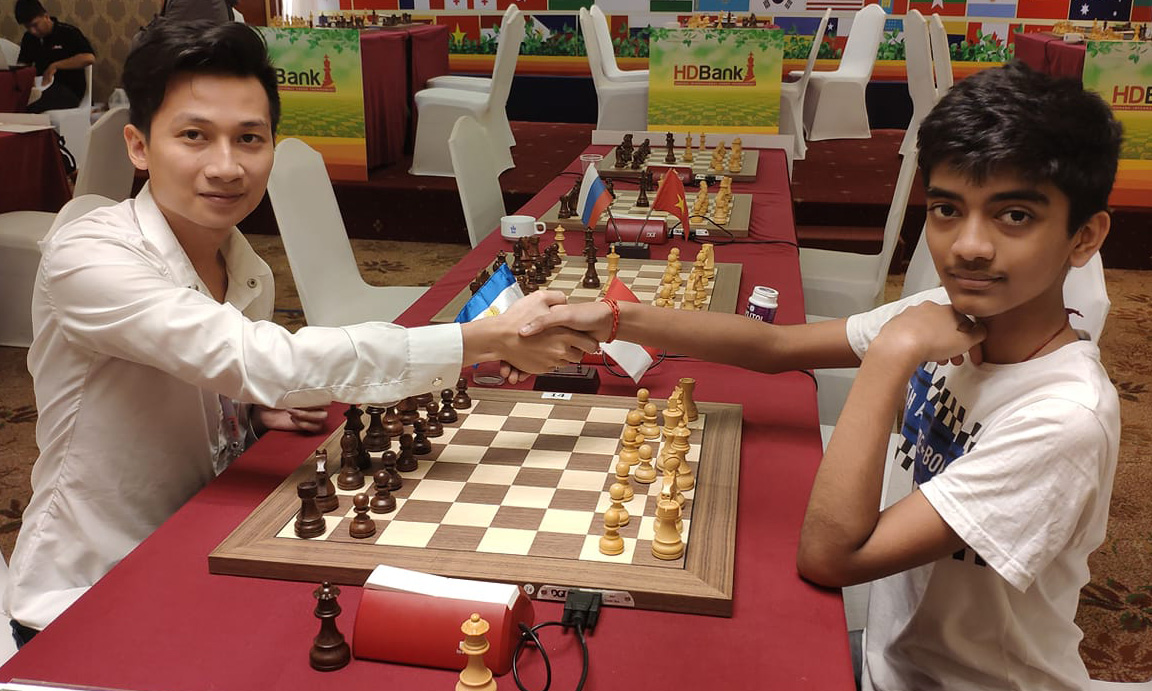
I’m Xuan Binh, the founder of Attacking Chess, and the Deputy Head of Communications at the Vietnam Chess Federation (VCF). My chess.com and lichess rating is above 2300. Send me a challenge or message via Lichess. Follow me on Twitter (X) or Facebook.