
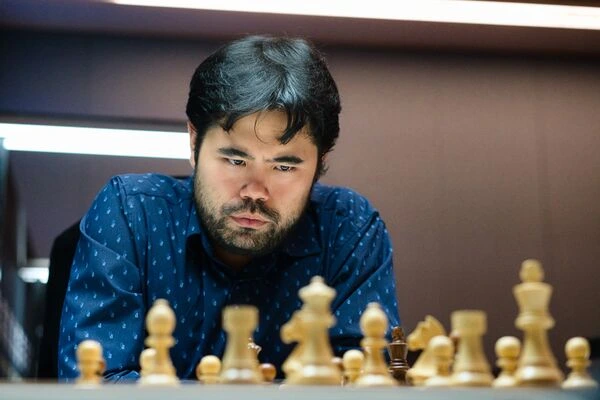
Hikaru Nakamura confirmed he will not play in the 2026 Chess Olympiad in Samarkand, scheduled from September 15 to 27. His decision follows a series of public comments about money, player behavior, and his own priorities in chess.
In a livestream, Nakamura explained his general view: “You get what you deserve.” He applied this directly to professional chess, saying that top players often complain about low prize money but continue playing under the same conditions. According to him, this pattern prevents real change in the system.
He also criticized players for not contributing to the growth of the game. Nakamura stated that many top grandmasters ask for more money but “do nothing to actually popularize the game or attract more sponsors.” His position is that financial improvement in chess requires active effort from players, not just complaints.
Separately, Nakamura addressed his relationship with classical chess. When asked about his wife Atousa Pourkashiyan, he said: “Of course, she’ll play classical chess in the future. Much harder for me to play classical chess.” This reflects a broader shift in his career, where he has focused more on faster formats and online events in recent years.
The Chess Olympiad is played entirely in classical format over 11 rounds. Nakamura’s comment suggests that this format is no longer a priority for him. His recent tournament activity supports this, with a stronger emphasis on rapid, blitz, and online competitions.
His decision drew immediate reactions. Hans Niemann, who has been selected to represent the United States at the Olympiad, responded publicly. He wrote: “It’s an honor to represent one’s country, the lack of patriotism is shocking.” Niemann also argued that money should not be a factor for Nakamura, adding: “An extra 20 or 30k as an appearance fee would not impact his life at all. Winning a gold medal is more valuable than anything money could buy.”
Niemann’s selection itself is notable. After several years of controversy following the 2022 cheating scandal, he has recently re-entered the top competitive circuit and will play for Team USA at the Olympiad. His statement highlights a contrast in priorities between players at different stages of their careers.
Reactions from the chess community have been mixed. Some users pointed out that Nakamura has already represented the United States multiple times in past Olympiads. Others argued that his current career, which includes streaming and sponsorships, gives him alternatives that most players do not have.
There was also discussion about financial conditions. Some comments supported Nakamura’s broader argument, noting that appearance fees and rewards at the Olympiad are relatively low compared to other international events. Others disagreed, saying that representing a country should not depend on financial incentives.
Additional factors were mentioned by the community, including Nakamura’s personal life. He recently became a father, which may influence how he prioritizes time and travel. However, Nakamura himself has focused his public explanation on structural issues in chess rather than personal reasons.
Criticism has also targeted his current classical strength. Some observers referenced his recent performances and suggested that his results in classical events have declined compared to previous years. These claims remain part of the public debate but were not directly cited by Nakamura as a reason for his decision.
In summary, Nakamura’s absence from the 2026 Olympiad is based on two clear points. First, he disagrees with how players and organizers handle financial issues in chess. Second, he no longer prioritizes classical chess in his competitive schedule.
The tournament will proceed with approximately 200 teams, including Team USA with Niemann in the lineup. Nakamura’s decision does not affect the event structure, but it has added a new discussion about incentives, formats, and player priorities in modern chess.

I’m the senior editor of Attacking Chess, a keen chess player, rated above 2300 in chess.com. You can challenge me or asking questions at Chess.com.