
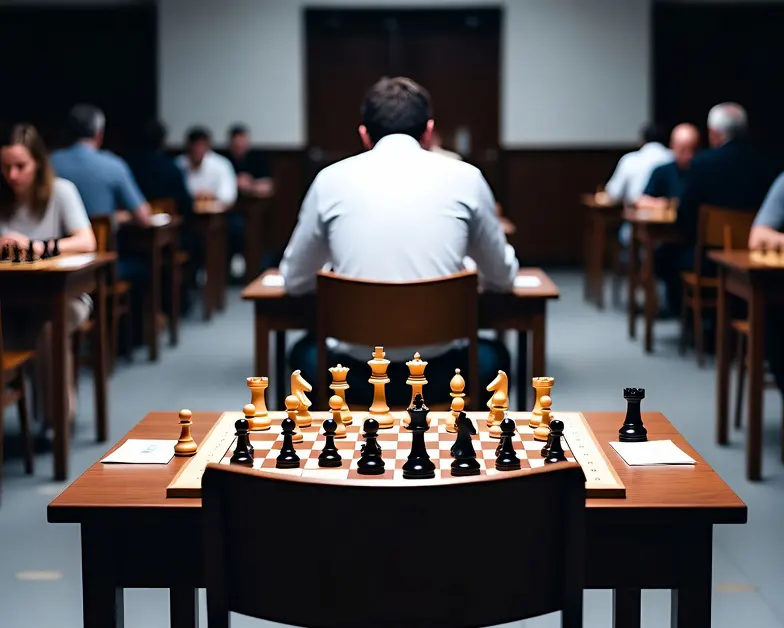
If you’ve ever played in an over-the-board chess tournament, you may have come across the term “bye.” At first, it sounds simple. Maybe even unimportant. But in reality, understanding how byes work—and when to use them—can make a meaningful difference in your tournament experience and even your final score.
Let’s break it down in a clear, practical way.
What Is a “Bye” in Chess?
In tournament chess, a bye means that a player does not play a game in a specific round.
Instead of sitting at the board and competing, you essentially “skip” that round. But what you get in return depends on the type of bye:
- Full-point bye (1 point): You receive the same score as if you had won a game.
- Half-point bye (0.5 point): You get a draw without playing.
- Zero-point bye (0 points): You skip the round but receive no score.
Not all tournaments offer all types of byes, and the rules vary depending on the event.
Why Do Byes Exist?
Chess tournaments, especially large ones, are designed to be flexible. Players may have real-life obligations, travel issues, or simply need a break.
Byes exist for practical reasons:
- You might not be able to arrive in time for round 1.
- You may need to leave early.
- You might feel too tired to play your best in a certain round.
- Personal or work commitments can conflict with the schedule.
Instead of forcing players to withdraw completely, tournaments allow byes so you can stay in the event while skipping certain rounds.
Types of Byes Explained
Understanding the different types of byes is key.
1. Full-Point Bye
This is the most valuable type.
- You get 1 point, the same as a win.
- You don’t have to play.
Sounds perfect, right? But there’s a catch.
Full-point byes are usually:
- Only allowed in early rounds (often round 1 or 2)
- Sometimes limited to lower-rated sections
- Rare in strong or professional events
Tournament organizers don’t want players skipping games and still competing for first place unfairly.
2. Half-Point Bye
This is the most common type.
- You receive 0.5 points, like a draw
- You skip the round entirely
This is a balanced option. You don’t risk losing, but you also don’t gain a full point.
3. Zero-Point Bye
This is simply an absence.
- You get 0 points
- You skip the round
This is basically the same as not showing up—but officially recorded so you can continue in later rounds.
How to Request a Bye
Most tournaments require you to request a bye in advance.
Typical rules include:
- You must submit your request before the tournament starts (or before a specific round)
- There is often a limit (e.g., maximum 2 or 3 byes)
- Some rounds (like the final round) may not allow byes
If you don’t request it properly, you risk being paired and then forfeiting, which is usually worse.
Strategic Impact of Taking a Bye
Here’s where things get interesting.
Taking a bye is not just a scheduling decision. It’s a strategic one.
Let’s explore the pros and cons.
Advantages of Taking a Bye
1. Rest and Recovery
Tournament chess is exhausting.
A single game can last 3–5 hours. In multi-day events, fatigue builds quickly.
Taking a bye:
- Gives your brain a break
- Helps you recover energy
- Can improve your performance in later rounds
For many players, this is the biggest advantage.
2. Avoiding a Bad Situation
Sometimes, you just know it’s not your day.
Maybe:
- You slept poorly
- You feel sick
- You’re distracted
Instead of risking a loss, a half-point bye can be a safe option.
3. Scheduling Flexibility
Real life doesn’t stop for chess.
Byes allow you to:
- Arrive late to the tournament
- Handle personal obligations
- Avoid missing the event entirely
4. Psychological Reset
After a tough loss, your mindset matters.
A bye can:
- Help you reset mentally
- Prevent tilt
- Give you time to prepare for the next game
Disadvantages of Taking a Bye
1. Lost Opportunity
Every round you skip is a missed chance to score a full point.
Even strong players don’t win every game—but you can’t win a game you don’t play.
2. Weaker Tie-Breaks
In many tournaments, standings are decided not just by points, but also by tie-break systems.
Byes can hurt your tie-breaks because:
- You don’t have an opponent contributing to your score
- Your strength of schedule may be weaker
This can matter a lot if you’re competing for prizes.
3. Loss of Momentum
Chess is partly about rhythm.
If you skip a round:
- You may lose your competitive flow
- You might feel rusty in the next game
Some players perform best when they play consistently.
4. Limited Use
Most tournaments limit the number of byes you can take.
So if you use them early without thinking, you might regret it later.
When Should You Take a Bye?
This is the key question.
There is no one-size-fits-all answer, but here are practical guidelines.
Good Times to Take a Bye
1. You physically or mentally need rest
If you’re exhausted, your playing strength drops significantly. A half-point bye may be better than a likely loss.
2. You have unavoidable real-life commitments
If you can’t make a round, a bye keeps you in the tournament without penalties.
3. Early rounds (especially for full-point byes)
If the tournament allows a full-point bye in round 1, it can be a strong option—especially if:
- You’re lower-rated
- You’re unlikely to beat your opponent anyway
4. After a tough loss (carefully)
If you’re emotionally shaken, a break can help. But don’t overuse this—resilience is also important.
Bad Times to Take a Bye
1. When you’re in good form
If you’re winning games and feeling confident, keep playing. Momentum is valuable.
2. Late rounds (especially if you’re competing for prizes)
Skipping a critical round can cost you:
- A chance to climb the standings
- Better tie-breaks
3. Just to avoid a strong opponent
This is usually a mistake.
Facing stronger players is how you improve. Avoiding them may protect your rating short-term, but it slows long-term growth.
4. Without a clear reason
Taking a bye just because it’s available is rarely a good idea. Every round matters.
Practical Examples
Let’s make this more concrete.
Scenario 1: The Tired Player
You’ve played two long games and feel drained.
- Taking a half-point bye in round 3
- Returning refreshed for rounds 4 and 5
This can improve your overall result.
Scenario 2: The Late Arrival
You can’t arrive until round 2.
- Request a full-point bye in round 1 (if allowed)
- Start playing from round 2
This is common and often optimal.
Scenario 3: The Prize Contender
You’re on 4/5 going into the final round.
- Taking a bye would likely eliminate your chance at first place
In this case, you should play.
Tips for Using Byes Wisely
- Plan ahead. Look at the schedule before the tournament starts.
- Know the rules. Every event has different bye policies.
- Think long-term. Consider both your score and your energy.
- Be honest with yourself. Are you resting strategically, or avoiding a challenge?
I’m Xuan Binh, the founder of Attacking Chess, and the Deputy Head of Communications at the Vietnam Chess Federation (VCF). My chess.com and lichess rating is above 2300. Send me a challenge or message via Lichess. Follow me on Twitter (X) or Facebook.