
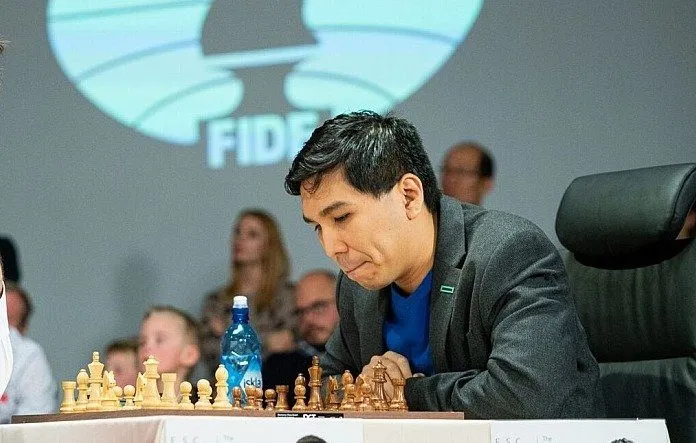
When Wesley So speaks critically about the state of elite chess, it tends to carry weight. He is not an outsider throwing stones. He is a former Fischer Random (Chess960) World Champion, a multiple-time Super GM tournament winner, and one of the most consistent elite players of the last decade. That is precisely why his recent criticism of the FIDE Freestyle Chess World Championship has ignited such a fierce debate within the chess world.
At the heart of So’s argument is a deceptively simple question: what does it actually mean to be a “World Champion” anymore?
Too Many World Champions, Too Little Meaning
In 2026, chess is on track to crown as many as five different “world champions” across formats: Classical, Rapid, Blitz, Freestyle (Chess960), and the newly announced “Total Chess World Championship.” For Wesley So, this explosion of titles is not progress.
From his perspective, D. Gukesh is the only legitimate World Champion at the moment because he won the Classical World Chess Championship through the traditional, most demanding process. That title, earned in long classical games after a multi-year qualification cycle, has historically defined greatness in chess. Fischer, Karpov, Kasparov, Anand, their legacies were built on that exact structure.
So argues that by slapping the words “World Championship” onto more and more events, FIDE is quietly devaluing the one title that actually matters. When everything is a world championship, nothing truly is.
This concern resonates with many fans who feel increasingly confused by the modern chess calendar. New viewers want clarity: qualification paths, Candidates tournaments, a final match. Instead, they are confronted with a maze of invitational events, shortened formats, and overlapping titles that blur the hierarchy of achievement.
“Political” FIDE and Commercial Priorities
So’s critique becomes sharper when he turns his attention to FIDE itself. He describes the organization as “very political” and openly suggests that its decisions are driven less by sporting integrity and more by financial and commercial incentives.
From this point of view, the proliferation of world titles is not accidental. Each “World Championship” label brings sponsorships, media attention, and legitimacy, even if the underlying event does not resemble a true world championship in structure or accessibility.
This perception is widely shared among observers who believe that FIDE has become too willing to monetize the prestige of the term “world champion.” Instead of protecting its rarity, the title is being used as a branding tool.
Invitational Tournaments Are Not World Championships
Perhaps So’s strongest objection concerns how players are selected for the Freestyle Chess World Championship.
Out of eight participants, seven are either invited directly or qualified through a tour that was itself largely invitational. Only one spot is decided via an open online qualifier. For So, this fundamentally disqualifies the event from being called a world championship.
The principle is straightforward:
If everyone in the world does not have an equal opportunity to qualify, it is not a world championship.
This argument echoes a core belief held by many players and fans. A true world championship should be open, merit-based, and transparent. Invitations undermine competitive legitimacy, no matter how strong the invited players are.
The fact that former world champions in the same format, including Wesley So himself and Hikaru Nakamura, were not automatically included only deepens the controversy. Nakamura declined his invitation for separate reasons, but So’s exclusion highlights the inconsistency of the selection process.
The Magnus Factor and Perceived Bias
So stops short of directly accusing Magnus Carlsen of controlling the event, but he openly suggests that certain players never seem to receive invitations to Magnus-linked tournaments. Wesley So. Anish Giri. These omissions have not gone unnoticed by fans, many of whom suspect that personal preferences, marketability, or stylistic biases play a role in who gets invited.
Even if Magnus does not officially “handpick” every participant today, the early DNA of Freestyle Chess, including invitation-based events and selective access, continues to shape the championship field. The lineage of qualification, critics argue, is already compromised at the source.
For a world championship, perception matters almost as much as reality. And right now, the perception is that access is gated, not earned.
Freestyle Chess Is Hard to Follow, Even for Experts
Another major pillar of So’s criticism targets the claim that Freestyle Chess is easier or more appealing for casual fans.
So flatly rejects this idea. In fact, he argues the opposite: Freestyle is harder to follow than classical chess. Without familiar opening structures, recognizable positions, or shared theoretical reference points, even experienced viewers struggle to orient themselves. Every game begins in total abstraction.
Many fans agree. Classical chess may be complex, but it offers anchors: openings, typical plans, and structures that amateurs can recognize and emotionally connect with. Freestyle skips all of that and drops viewers directly into positions that only elite professionals can immediately understand.
In trying to make chess more accessible, Freestyle may actually be making it less relatable.
The Time Control Problem: Speeding Up “Classical” Chess
While not the central focus of So’s comments, the broader debate around time controls reinforces his concerns. Many fans are uneasy about the gradual erosion of classical chess time limits, with formats like 45+30 now officially classified as “classical.”
To traditionalists, this feels like another example of chess being sped up for convenience rather than quality. Faster games may be easier to schedule and broadcast, but they often produce shallower play. If classical chess becomes just “slow rapid,” then one of the defining pillars of the World Championship is quietly removed.
So’s stance aligns with those who believe that classical chess should remain demanding, slow, and unforgiving, precisely because that is what makes the title meaningful.
An Old-Fashioned View, By Design
Wesley So does not pretend to be neutral. He openly describes himself as old-fashioned. He believes in long matches, challengers earning their shot, and champions being forced to prove themselves under the highest possible pressure.
He also rejects the idea that chess should model itself after leagues like the NBA, with annual resets and rapid turnover. Chess, in his view, is not entertainment first. It is a sport built on legacy, continuity, and historical comparison.
That belief puts him at odds with a growing faction that wants faster formats, online dominance, and constant novelty. But it also places him squarely in line with how the World Championship has traditionally been understood.
A Warning, Not Sour Grapes
Critics sometimes dismiss So’s comments as bitterness over not being invited. But that explanation feels insufficient. So has won major events recently, including elite blitz tournaments. His competitive relevance is not in question.
More importantly, many of his points would still stand even if he were invited.
When a world championship is invitational, rushed, reduced in prize fund, shortened in format, and detached from an open qualification cycle, skepticism is inevitable. When FIDE repeatedly attaches the most prestigious label in chess to increasingly experimental events, criticism is necessary.
What’s Really at Stake
Ultimately, Wesley So is not just criticizing one tournament. He is questioning the direction of elite chess governance.
If the Classical World Championship continues to be diluted by parallel “world titles,” its authority will erode. If fans cannot explain who the real world champion is, the ecosystem suffers. If qualification paths become opaque, players lose faith. And if prestige becomes something that can be purchased or negotiated, rather than earned, chess risks losing what makes it unique.
So’s message is not radical. It is conservative in the truest sense: protect what already works before inventing what does not.
Whether FIDE listens remains to be seen. But one thing is clear: Wesley So is voicing a concern that many players and fans already feel, even if fewer are willing to say it out loud.

I’m a passionate board game enthusiast and a skilled player in chess, xiangqi and Go. Words for Attacking Chess since 2023. Ping me at Lichess for a game or chat.