
“Can anybody become a FM? I do think that is available to anybody. Can anybody become a GM? That is a hard no.” — Sam Shankland
That blunt statement cuts straight through one of the most common dreams in chess. Every ambitious player eventually asks the same question. If I work hard enough, can I reach the very top?
The uncomfortable truth is that becoming a Grandmaster is not just difficult. It sits at the edge of what is realistically possible for almost everyone.
The Scale of the Challenge
To understand why, you need to look at the numbers.
There are only around 1,700 active Grandmasters in the world. Out of hundreds of millions of people who know how to play chess, that’s a microscopic percentage.
Even among serious, tournament-playing competitors, the odds are brutal.
“Statistically, I think you’re more likely to become a billionaire than a grandmaster.” — IM Eric Rosen
“You’re more likely to be a panda than a grandmaster.” — IM Eric Rosen
The humor lands because the underlying point is real. This isn’t just a hard goal. It’s an extreme outlier outcome.
What It Actually Takes to Become a Grandmaster
The requirements sound simple on paper:
- Achieve three GM norms (elite tournament performances)
- Reach a 2500 FIDE rating
But those two lines hide a mountain.
The rating requirement alone eliminates almost everyone. A 2500 rating is not just “very strong.” It places you among the absolute elite of competitive players worldwide.
And getting there is not a smooth climb.
“It’s not easy to be 2500 FIDE-rated when you’re like 2350… you can’t just snap your fingers and be 2500. That’s not how it works.” — GM Ben Finegold
Even strong International Masters often spend years trying to bridge that final gap. Many never do.
The 150-Point Illusion
One of the biggest misconceptions in chess improvement is how people think about rating gains.
Going from 2350 to 2500 sounds like “just 150 points.” In reality, that jump is enormous.
“If I gained 150 FIDE points at my peak, I would be over 2700… do you think there was any chance? No. Zero chance.” — GM Ben Finegold
At higher levels, each rating point becomes exponentially harder to gain. Progress slows. Competition gets tougher. Mistakes are punished instantly.
So when people say “I just need 100 more points,” they are often underestimating the difficulty by an order of magnitude.
Age Matters More Than People Want to Admit
There is a popular belief that with enough discipline and study, anyone can catch up.
Reality disagrees.
“That’s not super difficult if they’re between like 10 and 20 years old… but they’re not.” — GM Ben Finegold
Most Grandmasters start young. Very young.
They build pattern recognition, intuition, and calculation skills during childhood, when the brain is most adaptable. By their teenage years, many are already approaching master level.
Trying to replicate that trajectory as an adult is not impossible. But it is extraordinarily rare.
“Nobody over the age of 30 gets three GM norms out of nowhere and gains 150 points.” — GM Ben Finegold
That’s not discouragement. It’s statistical reality.
Talent vs Hard Work
This is where the debate becomes uncomfortable.
Chess culture often emphasizes hard work. Study more. Analyze more. Play more.
And that absolutely matters. No one becomes strong without effort.
But at the Grandmaster level, effort alone is not enough.
There are additional factors:
- Natural pattern recognition speed
- Memory and recall ability
- Calculation depth
- Psychological resilience
- Access to strong competition and coaching
Some players combine all of these. Most don’t.
That’s why Shankland draws a line between FM and GM. One is within reach for many dedicated players. The other requires something extra.
Why FM Feels Achievable (But GM Doesn’t)
The FIDE Master title (FM) requires a rating of 2300.
That’s still very strong. But the gap between 2300 and 2500 is not linear. It’s exponential.
At 2300:
- You are better than almost everyone you meet
- You understand strategy deeply
- You can calculate well
At 2500:
- You compete with professionals
- You rarely make serious mistakes
- You convert tiny advantages consistently
The difference is not just skill. It’s precision, consistency, and resilience at the highest level.
That’s why many strong players plateau between 2200 and 2400. They are already excellent. But breaking through requires another leap entirely.
The Psychological Trap
There is also a mental side to this question.
Believing “anyone can become a GM” sounds motivating. But it can create unrealistic expectations.
When progress slows, players blame themselves:
- “I’m not working hard enough”
- “I’m doing something wrong”
In reality, they may already be near their practical ceiling.
Understanding the difficulty can actually be freeing. It allows you to set goals that are ambitious but grounded.
So… Can Anyone Become a Grandmaster?
If the question is literal. Is it physically possible for any human to reach GM level?
Then yes. Humans have done it.
But if the question is practical. Can any random person, with effort alone, realistically achieve it?
Then Shankland’s answer holds.
A hard no.
Not because effort doesn’t matter. But because at that level, effort is only one piece of a much larger puzzle.
A Better Question to Ask
Instead of asking:
“Can anyone become a Grandmaster?”
A more useful question is:
“What level can I realistically reach, and how far can I push it?”
Because chess has value far beyond titles.
You don’t need to be a Grandmaster to:
- enjoy the game deeply
- compete seriously
- build a chess audience
- analyze games at a high level
In fact, many successful coaches, creators, and writers are not Grandmasters.
And that includes people who understand the game far better than the average player ever will.
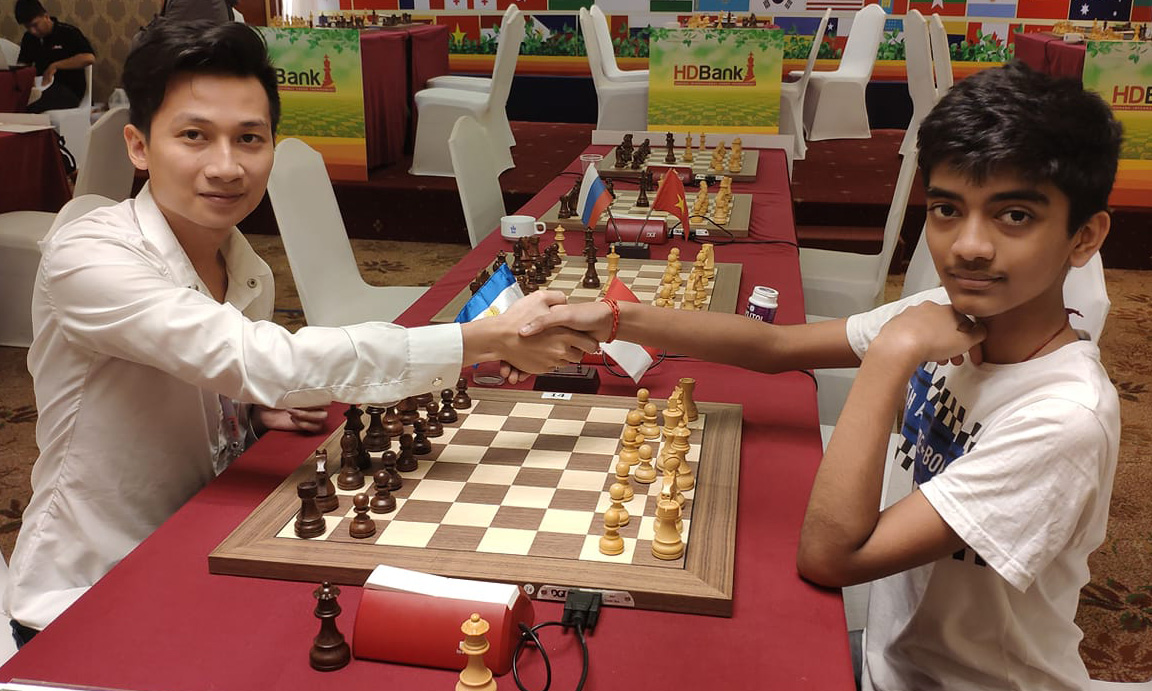
I’m Xuan Binh, the founder of Attacking Chess, and the Deputy Head of Communications at the Vietnam Chess Federation (VCF). My chess.com and lichess rating is above 2300. Send me a challenge or message via Lichess. Follow me on Twitter (X) or Facebook.