
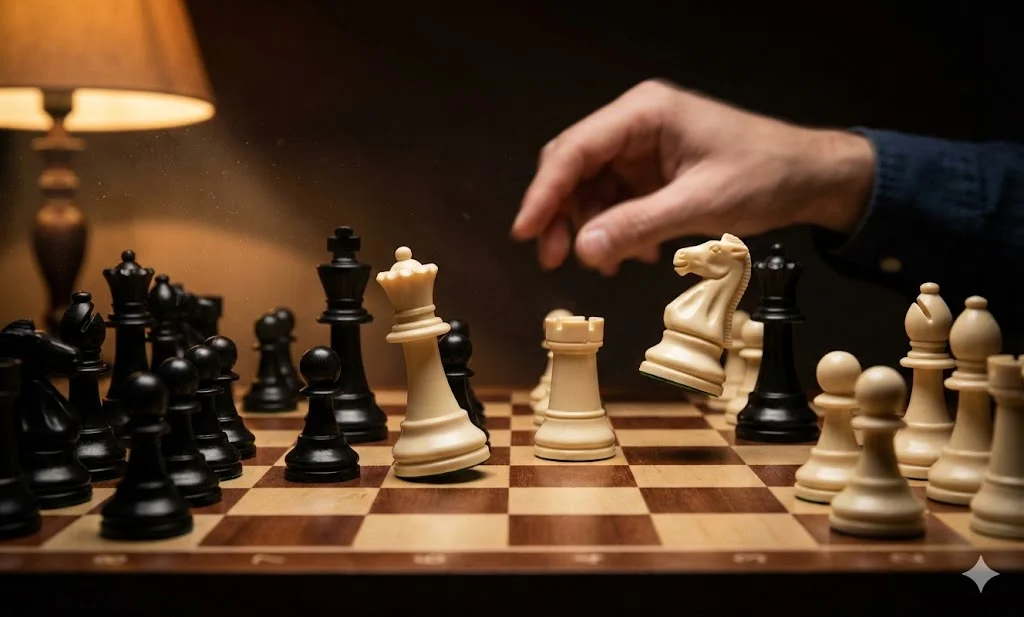
For intermediate and club players, developing a potent attack is one of the fastest routes to tangible improvement and success. Victories earned through a brilliant combination or a relentless assault on the enemy king are not only the most memorable but also the most instructive. Attacking chess, however, is not merely about reckless aggression. It is a refined skill built on a foundation of solid principles, pattern recognition, calculation, and a cultivated instinct for opportunity.
In our practice as chess trainers, we have established that lasting improvement comes from enhancing skills, not just accumulating knowledge. Many players believe that if they simply learn enough opening theory or memorize enough tactical puzzles, they will automatically play better. If only it were that simple! Knowledge must be applied, and its application in a real game is a skill in itself.
An attack on the king requires you to find tactical ideas hidden beneath the surface, calculate variations accurately, and most importantly, visualize the position that will arise several moves ahead.
Why Attacking Chess Supercharges Your Overall Game
Dedicating yourself to mastering the art of the attack develops a range of cognitive abilities that benefit every aspect of your chess and even extend beyond the board. By working on this creative and attractive topic, you will hone the following critical skills:
• Visualization: The ability to clearly see the board in your mind’s eye several moves ahead, a cornerstone of strong calculation.
• Structural Thinking: The capacity to weigh possibilities, formulate logical plans, and build your attack step-by-step.
• Anticipation: The skill of reacting to changing circumstances, adjusting your attack as your opponent defends, and foreseeing their counter-threats.
• Memory Improvement: The power to recognize and recall crucial mating patterns and tactical motifs, allowing you to spot them instantly in your own games.
• Focus and Concentration: The mental discipline required to calculate deeply and accurately, shutting out distractions to find the winning path.
This guide will systematically deconstruct the essential components of a successful attack, providing you with the tools, patterns, and thought processes needed to cultivate your attacker’s instinct and overpower your opponents. We will begin with the foundational building blocks—the mating patterns that serve as your ultimate goal—before moving on to the tactical weapons and piece combinations that make your attacks unstoppable.
1. The Foundations of an Attack: Creating and Recognizing Opportunities
Before launching an attack, a player must understand the preconditions for success. An assault that begins without a clear objective, a breach in the enemy defenses, or sufficient forces is doomed to fail. This section covers the fundamental building blocks of any successful attack: recognizing the final goal (the mating pattern), creating an opening in the king’s fortress, and mobilizing your army to ensure overwhelming force at the point of contact.
1.1 Recognizing the Goal: Essential Mating Patterns
A successful combination is rarely a bolt from the blue; it is “conjured up” because the attacker recognizes a familiar pattern in a more complex position. The best way to build this pattern recognition is to study these motifs in their “pure form,” as seen in endgame studies and problems. Once a pattern is drummed into your memory, you will begin to spot it lurking beneath the surface of your own games.
Consider this classic mating pattern with a bishop and knight:
White to move
1.Kg4
The only square for the knight where it won’t be lost is 1...Nh7.
This, however, allows White to force a clean mate, culminating in the sequence ...Ng6+ Kg8; Be6#.
Notice how Black’s own pieces on g7 and h7 block the king’s escape squares. This is a pattern to remember.
Now, let’s see how this same pattern can be the goal of a more complex combination.
White to move
1.Re8+!!
A brilliant sacrifice. To execute the combination, White must open the a2-g8 diagonal for the bishop. This is a tactic known as a clearance sacrifice, sacrificing a piece to clear a critical square or line for another piece.
1…Bxe8 2.Qg6 Bxg6 3.Nxg6+ Kg8 4.Bc4+ Qd5 5.Bxd5#
We arrive at the same beautiful checkmate.
A strong player carries these patterns in their “rucksack” and can deploy them when the opportunity arises. Look at how this knowledge translates into a practical game situation.
Kuzminykh-Taimanov (analysis)
White to move
1.Ng6!
A forceful move threatening mate in one (Qh8). After the only defense, 1...Nh7, White continues with another sacrifice to break through. (After 1…fxg6 Black loses the queen without a fight, by 2.Bxe6+).
2.Rxe6! fxe6
Now comes the key move, which a player like Taimanov would find instantly because he recognizes the final pattern.
3.Qxd8+!! Qxd8 4.Bxe6#
Full circle. The pattern, first seen in a simple study, becomes the winning idea in a complex middlegame.
1.2 Breaking Open the Fortress
If the enemy king is a flag to be captured, his pawn shield is the castle wall protecting it. To get to the king, you must first create a breach. Much like a medieval army used a battering ram to pound on a castle gate, a chess attacker uses sacrifices to smash open the pawn structure.
One of the most common and satisfying patterns is “Anastasia’s Mate,” executed by a rook and knight.
Example: Anastasia’s Mate
White to move
1.R1xd4! exd4
The battering ram strikes. White clears the fifth rank for his other rook.
2.Qxh7+ Kxh7 3.Rh5#
A characteristic queen sacrifice smashes through to the king, leading to a swift and elegant mate.
This idea of clearing a line for another piece is a critical preparatory step in many attacks.
Example: Clearance for Anastasia’s Mate
White to move
1.Ne7+!
Another clearance move, this time sacrificing a knight to clear the fifth rank.
1…Qxe7
Forced, as 1...Kh8 allows 2.Qxf8#.
2.Qxh7+! Kxh7 3.Rh5+ Kg8 4.Rh8#
The attack triumphs because the first move prepared the way for the rook to deliver the final blows.
Sometimes, the target isn’t the gate itself but the very foundations of the wall. In the following game, White sacrifices material to attack the pawns supporting the castled position.
Sant Boi 2014
White to move
28.Rxf5! exf5 29.e6!
A brilliant pawn sacrifice that attacks the foundations of Black’s kingside. After 29...fxe6, White’s queen and rook coordinated for a decisive attack and winning the queen, forcing Black’s resignation.
1.3 Mobilizing Your Army: Bringing Pieces to the Attack
An attack is far more likely to succeed when more pieces are involved. Just as an army needs sufficient manpower to storm a castle, a chess attack needs overwhelming force. This often requires bringing pieces from distant locations to join the fight. An attack has a better chance of success if some of the opponent’s pieces are “tucked away” on the other side of the board, unable to help in the defense.
In the following example, it seems the attack has stalled, but a “quiet move” brings the final, decisive piece into the fray.
Oney-Kalinaga, Turkey 1984
White to move
After 1.Rxf7+! Kxf7 2.Rc7+ Be7 3.Qe4! Re8 4.Qe6+ Kf8, Black seems to have sealed the breach. But White is not finished.
5.Be4!
With this quiet move, White brings his last piece into the attack. Though a rook down, Black cannot stop the mating net woven by the white queen and bishop.
Sometimes, a quiet preparatory move can set up a grandiose motif, as in this example leading to the “Arabian Mate.”
Example: Arabian Mate
White to move
1.Qg5!
A stunning quiet move that sacrifices the queen by threatening mate in one on h3. Black must respond. After 1...Rg8 to protect g7, White continues the attack.
2.Qxh6+! gxh6 3.Rxg8#
This is the classic Arabian Mate, brought about by a clever setup that mobilized the rooks with decisive effect.
One of the most powerful ways to bring a new piece into the attack is the rook lift. By advancing the h-pawn, a rook on h1 can swing into the action via the third rank.
White to move
11.h4!?
This move begins a powerful plan. The rook on h1 is prepared to join the battle. After 11...Nd7 12.Rh3 c5 13.Rg3.
The once-passive rook has become a key attacker on the g-file, creating the pressure that set the stage for a spectacular winning sacrifice like 13…c4 14. Qh6 g6 15. Nf4 cxd3 16. Nh5 Bf6 17. Ng5 Bxg5 18. Qg7#.
The great Garry Kasparov was also a master of this technique, famously using h4! to activate his rook in a celebrated game against John van der Wiel.
To summarize, a successful attack is built on three pillars: recognizing the target pattern you are aiming for, creating a breach in the enemy’s defenses to get to the king, and ensuring you have mobilized overwhelming force to finish the job.
2. The Attacker’s Toolkit: A Catalog of Tactical Weapons
Successful attackers don’t just hope for opportunities—they create them. They possess a “toolkit” of recurring tactical ideas and are constantly scanning the board for the chance to deploy them. Mastering these fundamental weapons is a key skill. Once you can recognize the potential for these tactics in a position, you will start to find combinations you never saw before.
2.1 Overloading the Defender
A piece is overloaded (or overburdened) when it is tasked with two or more critical defensive duties at the same time. A well-timed sacrifice can exploit this by forcing the piece to abandon one of its tasks.
Bechtiger-Koronghy, Zürich 1981
Black to move
1…Rxh3+!
The white queen on f3 was overloaded: it had to defend both the h3-pawn and the rook on d1. The g2-pawn was also overloaded, tasked with protecting h3 and keeping the second rank closed. After 2.Kg1 Rxf3, Black wins a queen. After 2.Qxh3 Qxd1# or 2.gxh3 Qh2#, it is mate.
2.2 Elimination and Deflection
These tactics work to remove or lure away key defensive pieces, leaving the king exposed. Elimination directly removes a defender, while deflection lures it to a less useful square.
Reinderman, Gouda rapid 2013
White to move
38.Rxd8+!
This move eliminates the bishop on d8 and deflects the king. Because the rook on d7 is pinned, Black must recapture with the king.
38…Kxd8
Now the king is lured onto a fatal square.
39.Rc8+ Kxc8 40.Qc6+ Kd8 41.Qa8#
A beautiful sequence where defenders are systematically removed and the king is drawn into a mating net.
2.3 The Magnet Combination
A magnet combination is a sacrifice that lures the enemy king out of its shelter, pulling it forward into a “king hunt” where it can be attacked by multiple pieces.
White to move
1.Qxh6+!!
A classic queen sacrifice that acts as a magnet, drawing the black king into the open.
1…Kxh6 2.Ne6+! Kh5 3.Be2+ Kh4 4.g3+ Kh3 5.Ndf4+ Nxf4 6.Nxf4#
The king is hunted down and checkmated in the middle of the board, far from its original “safe” square.
2.4 The Double Check
A double check is one of the most powerful tactical weapons. It is a discovered check where both the moving piece and the piece it uncovers deliver a check simultaneously. Because two pieces are checking the king, the only legal response is for the king to move. This forcing nature makes it a deadly tool.
White to move
1.Qd7! Bxd7
After eliminating a key defender, White unleashes the double check.
2.Nd6+!
The knight covers the escape square f7, forcing the king onto the exposed d-file, where it will be finished off. After 2...Kd8 3.Nf7+ Kc8, White finishes with 4.Re8+! Bxe8 5.Rd8#.
2.5 Clearance
Clearance is the act of moving one of your own pieces out of the way to open a critical square, file, rank, or diagonal for another piece. This is often done with a sacrifice to gain time.
• Square Clearance: A piece is moved from a key square so another piece can occupy it.
White to move
White sees a checkmate with the knight on d7, but his own queen is in the way.
1.Qc8+! Rxc8 2.Nd7#
The queen clears the d7 square with tempo, allowing the knight to deliver the final blow.
• Line Clearance: A piece is sacrificed to open a line (file, rank, or diagonal).
Van Wely-Van Kampen, Amsterdam 2014
White to move
23.f3! Qxf3 24.e4!
A brilliant double pawn sacrifice. The moves f3 and e4 clear the c1-h6 diagonal, introducing a deadly threat of Qxh6. This powerful line clearance led to a swift victory.
24…dxe4. 25.Nh5, threatening mate with both 26.Rxh6 and 26.Bxg7.
2.6 The Pin
A pin immobilizes an enemy piece, as moving it would expose a more valuable piece (or the king) to attack. A well-executed pin can neutralize a key defender and enable a winning attack.
White to move
After 1.Bc2 g6, White plays 2.Bb3. This move seems casual, but it sneakily pins the black f7-pawn against the king. The pawn can no longer defend the g6-square.
2…axb4??
A fatal mistake. Black, distracted, fails to notice the pin.
3.Qxg6+!
With the defender of g6 pinned, the queen crashes through, leading to a forced mate. Even top players can miss the power of a pin; in the famous game Szabo-Reshevsky, Zurich 1953, both players overlooked a simple mate based on a pinned f7-pawn.
2.7 Interference
Interference occurs when a piece is placed on the intersection of two lines of attack or defense, disrupting the coordination of the enemy pieces. This is a more advanced concept, sometimes known by specific names like “Plachutta” in endgame studies.
Black to move
White’s queen on d1 defends against ...Qh6+, and the bishop on d5 defends against ...Ng2+. The intersection of these two defensive diagonals is the f3 square.
1…♖f3!!
A stunning interference move. The rook lands on the intersection point, disrupting both defensive lines. White cannot cope with both threats, and Black wins quickly, for example: 2.Bxf3 Qh6+ 3.Bh5 Ng2#.
Learning to recognize the conditions for these tactics is the first step toward using them effectively. Actively look for these patterns in your games and in master games to sharpen your tactical eye.
3. Mastering Piece Coordination: The Engines of the Attack
While individual tactical shots are powerful, the most devastating and beautiful attacks come from pieces working in perfect harmony. A lone piece is easily repelled, but a coordinated assault by multiple pieces can overwhelm even the staunchest defense. Mastering the unique synergies of different piece combinations is a hallmark of a great attacking player. This section explores the most common and powerful attacking tandems: the Queen and Bishop, the Queen and Knight, and the combined might of the major pieces.
3.1: The Queen and Bishop Battery
The queen and bishop form a classic attacking duo. When placed on the same diagonal, they create a powerful “battery” that can slice through an opponent’s position, often aimed directly at the enemy king. This combination is fundamental to many basic mating patterns.
• The ABCs of the Bishop Sacrifice on h7/h2
• One of the first combinations every player learns involves the queen and bishop.
• Attacking with Opposite-Colored Bishops
• When opposite-colored bishops are on the board, the attacker has a significant advantage. The key principle is that the defending bishop cannot control the squares being attacked by the opposing bishop.
• Breaking Open the Position for the Battery
• Often, the king is well-protected, and a sacrifice is required to open lines for the queen and bishop.
• The Strategic Setup of a Battery
• In the hands of a master like Mikhail Botvinnik, setting up a battery is a long-term strategic goal.
3.2: The Lethal Queen and Knight Tandem
The queen and knight form a particularly dangerous attacking combination. The knight’s unique, non-linear movement perfectly complements the queen’s long-range power, allowing them to attack squares of both colors and create threats that are very difficult to defend against.
• Smothered Mate
• The ultimate expression of queen and knight synergy is the smothered mate, a pattern every club player should know.
• The Standard Sacrifice: Bxh7+
• This classic sacrifice is often the prelude to a devastating attack by the queen and knight.
• The Tandem in Action
• In the hands of a creative genius like Judit Polgar, the queen and knight can produce true works of art.
• Superiority over Queen and Bishop
• In many attacking situations, the queen and knight tandem is superior to the queen and bishop, especially against a weakened king position. The knight’s ability to control key squares of the opposite color of the bishop is often decisive.
3.3: Dominance of the Major Pieces: Rooks and Queen
When major pieces—the rooks and the queen—coordinate their power against the enemy king, the defense is often overwhelmed. Their ability to control entire ranks and files makes them ideal for invasions, especially on open files or the opponent’s seventh rank (or second rank from Black’s perspective).
• Exploiting a Weak Back Rank
• One of the most common tactical oversights is a weak back rank. A well-timed deflection sacrifice can be lethal.
• Invasion on the Seventh Rank
• A rook or queen on the seventh rank can wreak havoc, attacking pawns and tying down the opponent’s pieces. Sometimes, this invasion must be achieved by force.
• The “Hook and the Ladder Trick”
• This memorable name describes a tactic that overloads a piece responsible for defending both the back rank and another key piece. The attacking piece acts as a “hook” to pull away the “ladder” supporting the defense.
• The Rook/Queen Switch
• A powerful maneuver is to switch a major piece from one rank or file to another to create new threats.
Mastering the unique strengths and synergies of these piece combinations is a critical step toward becoming a formidable attacking player. These combinations are most effective when they have open lines to operate on, which is the subject of our next section.
4. Exploiting Open Lines and Pawn Weaknesses
Attacks rarely succeed against a solid, unweakened pawn structure. The pawns in front of the king are a fortress wall, and before you can attack the king, you must create a breach. A key part of attacking is first creating the weaknesses and then exploiting them. This section focuses on the practical methods used to create and exploit the open lines and pawn weaknesses that serve as the highways for your attacking pieces.
4.1: The H-File: The Ultimate Attacking Superhighway
An open or half-open h-file is one of the most common and powerful assets in a kingside attack. It provides a direct route for a rook and queen to target the squares h7 and h8, often leading to decisive sacrifices and mating nets. The games of Bobby Fischer provide a masterclass in exploiting this line of attack.
Fischer-Myagmarsuren, Sousse 1967
White to move
Fischer has been building pressure against the Black king. 27.h5 opened lines, and 28.Rh4 placed the rook on the newly opened h-file. After Black’s defense 30...Qf8, Fischer unleashed one of the most famous combinations in chess history.
31.Qxh7+!! Kxh7 32.hxg6+ Kxg6 33.Be4#
The culmination of a perfectly executed attack down the h-file, where every piece plays its part in the final, beautiful mate.
4.2: Weakening the King’s Shield: The ...g6 Pawn Push
The move ...g6 (or g3 for White) is often a necessary defensive move, particularly against a fianchettoed bishop. However, it permanently weakens the dark squares (f6 and h6) around the king. A skilled attacker knows how to target these newly created weaknesses.
• The h4-h5 Push
• This pawn thrust is a standard method for cracking open the h-file against a Dragon Sicilian setup or any position where Black has played ...g6.
• The f4-f5 Push
• Another way to attack the weakened dark squares is with the f4-f5 pawn push, which opens the f-file and puts pressure on the f7-pawn.
4.3: Targeting the ...h6 Pawn
The move ...h6 often feels like a safe, useful move. It prevents a back-rank mate by creating “luft” (an escape square for the king) and stops an enemy piece from landing on g5. However, this pawn can itself become a target – a “hook” that the attacker can use to latch onto and rip open the kingside.
• The g4-g5 Pawn March
• The primary method for attacking the h6 “hook” is to advance the g-pawn. The g4-g5 push challenges the h6 pawn, forces open lines, and creates new attacking possibilities.
• The Piece Sacrifice on h6
• When the h6-pawn is a target, a piece sacrifice on that square can be a powerful way to tear open the pawn cover and allow other pieces to flood into the attack.
Creating and exploiting weaknesses is the strategic heart of attacking chess. By understanding how to use your pawns and pieces to provoke and punish these weaknesses, you can turn a quiet position into a raging battlefield where your forces hold all the advantages.
5. A Practical Training Plan for Attacking Players
Understanding the principles, patterns, and tactics of attacking chess is the first step. To truly improve, however, requires deliberate and focused practice. Knowledge is only powerful when you can apply it skillfully over the board. This final section synthesizes the key lessons from this guide into an actionable training plan designed for the ambitious club player looking to become a feared attacker.
• Master the Mating Patterns: Regularly solve simple mate-in-2 and mate-in-3 tactical puzzles. Focus specifically on exercises that feature the key piece combinations discussed here: Queen & Bishop, Queen & Knight, and Queen & Rook. This daily practice builds your “rucksack” of patterns, making them instantly recognizable during a game.
• Study the “Attacker’s Toolkit”: Create a personal study file or notebook. For each tactical weapon covered in Section 2 (Overloading, Elimination, Deflection, Magnet Combination, Double Check, Clearance, Pin, and Interference), find and solve at least five examples from master games. Write down the solution and a short explanation of how the tactic works. This active learning process will cement these ideas in your mind.
• Deconstruct Master Attacks: Take the key game examples from this article—such as Fischer-Myagmarsuren, Kasparov-Van der Wiel, and Anand-Radjabov—and play through them on a real board without looking at the notes. At each critical attacking moment, pause and ask yourself: “What would I play here?” Try to predict the attacker’s plan and calculate the variations before checking the actual game score. This trains your ability to think like a master attacker.
• Practice Visualization: When solving any tactical exercise, resist the urge to move the pieces on the board or screen. Force yourself to calculate all the variations entirely in your head. Start with simple positions (mate-in-2) and gradually increase the complexity. This directly trains the skill of visualization, which, as we’ve discussed, is absolutely crucial for seeing combinations that are several moves deep.
• Analyze Your Own Games: After every game you play—win, lose, or draw—go back and look for moments where an attack might have been possible for either side. Ask yourself critical questions:
◦ Were the preconditions for an attack met?
◦ Did I have enough pieces mobilized?
◦ Was there a weakness in the pawn structure to target?
◦ Did I miss a key tactical weapon from the toolkit? This reflective practice is the best way to bridge the gap between theoretical knowledge and practical application.
Attacking chess is one of the most exciting and rewarding aspects of our noble game. It is a skill that can be learned and honed. With systematic training based on these principles and a commitment to deliberate practice, any intermediate player can develop the confidence and ability to create their own masterpieces on the board.
This article draws on several ideas from Attacking Chess for Club Players by Herman Grooten.
If you’d like to dive deeper into attacking play, you can purchase the book through Forward Chess or Amazon.
Buying through these affiliate links comes at no extra cost to you.
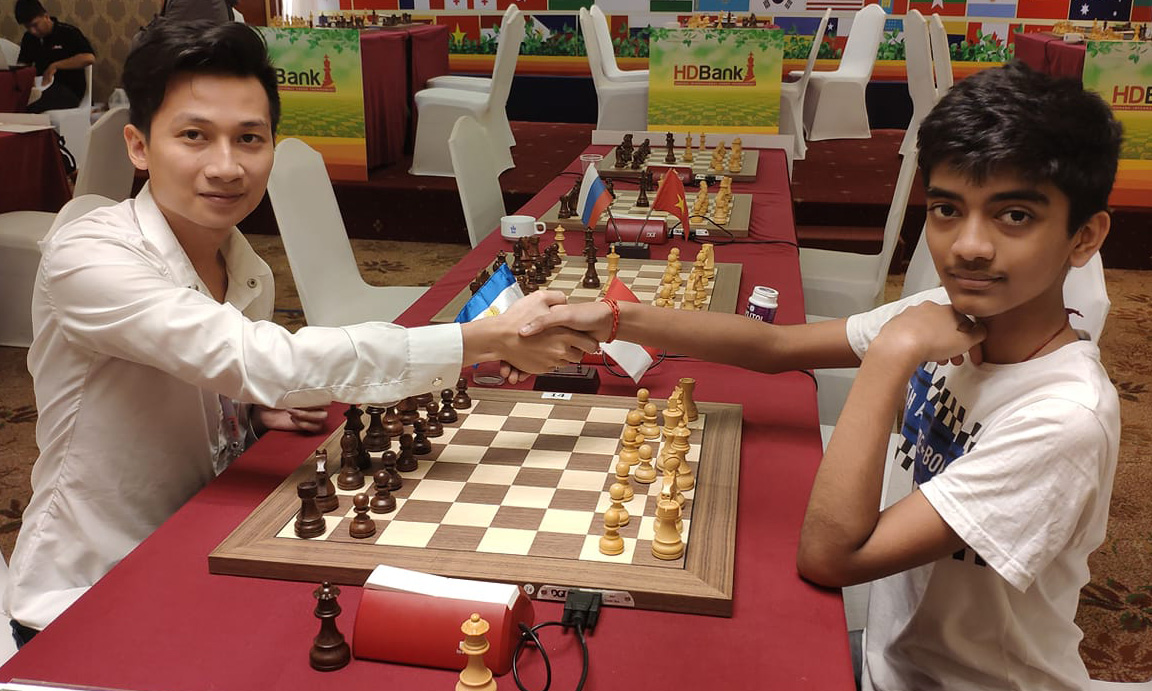
I’m Xuan Binh, the founder of Attacking Chess, and the Deputy Head of Communications at the Vietnam Chess Federation (VCF). My chess.com and lichess rating is above 2300. Send me a challenge or message via Lichess. Follow me on Twitter (X) or Facebook.