
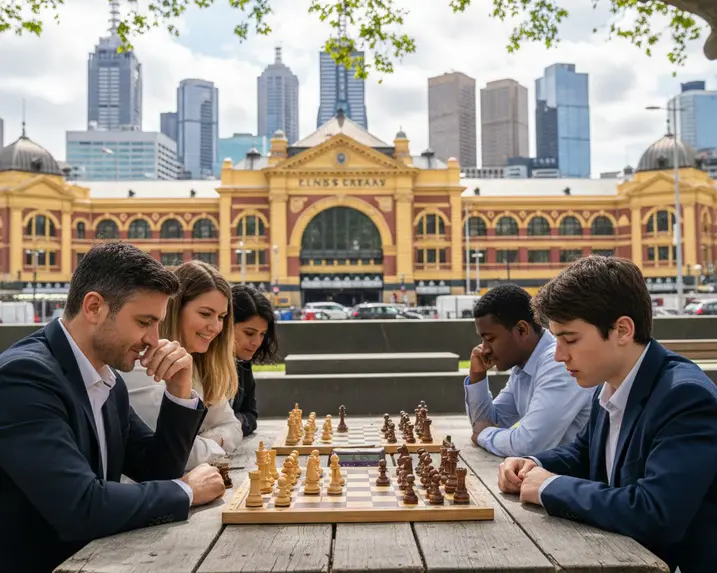
Finding a chess club in Melbourne is a straightforward process whether you are a casual player looking for a social game or a competitive enthusiast aiming for an official rating. As the home of the oldest chess club in the Southern Hemisphere, Melbourne offers a rich infrastructure for players of all ages.
This guide provides a step-by-step walkthrough on how to join a club, detailing the most prominent organizations in the city.
1. Top Chess Clubs in Melbourne
Melbourne’s chess scene is anchored by several large clubs that offer different atmospheres, from historic competitive hubs to suburban community centers.
Melbourne Chess Club (MCC)
Located in Fitzroy, the Melbourne Chess Club is the largest and oldest club in Australia. Established in 1866, it is unique because it owns its own premises, providing a dedicated space for chess 365 days a year.
- Best For: Serious competitors, history buffs, and those seeking daily access.
- Key Events: Wednesday Social Nights, Saturday Allegro (rapid) tournaments, and prestigious club championships.
Box Hill Chess Club
Situated in Ashwood, this is the most prominent suburban club in Victoria. It works in close partnership with the Canterbury Junior Chess Club, making it a powerhouse for both adult and youth development.
- Best For: Residents in the eastern suburbs and families with children.
- Key Events: Rated Tuesday night tournaments and extensive junior coaching programs.
Hobsons Bay Chess Club
Based in Yarraville, this club serves the western suburbs. It is known for being friendly and accessible, operating out of the Yarraville Club.
- Best For: West-side residents looking for a balance of social and competitive play.
- Key Events: 5-week and 7-week “long time frame” tournaments.
Wyndham Chess Club
Located in the outer west (Werribee/Truganina), this club has seen rapid growth. It focuses heavily on community engagement and junior development.
- Best For: Players in the Werribee and Point Cook areas.
2. Step-by-Step Guide to Joining
Joining a club in Melbourne typically follows a four-step sequence.
Step 1: Visit as a Guest
Most clubs do not require you to be a member for your first visit. In fact, it is highly recommended to attend a “Social Night” or a “Blitz Night” first to see if the environment suits you.
- Melbourne Chess Club allows visitors to pay a small “visitor fee” (typically around $10–$20) to play for an evening.
- Wyndham Chess Club often offers the first visit for free to newcomers.
Step 2: Choose Your Membership Tier
Once you decide to join, you will need to select a membership category. Fees vary based on your age and employment status:
- Full Adult Membership: Usually ranges from $85 to $100 per year for suburban clubs. The Melbourne Chess Club may have higher rates due to its daily facilities.
- Concession/Student: Discounted rates (around $70) for health care card holders and full-time students.
- Junior: Specifically for those under 18 (typically $40–$75).
Step 3: Register Online or In-Person
Most Melbourne clubs now use Tornelo, an Australian-developed chess tournament management platform.
- Create a Tornelo Account: Go to tornelo.com and sign up for free.
- Find the Club: Search for the specific club (e.g., “Box Hill Chess Club Membership”).
- Payment: Pay the annual fee via credit card or bank transfer as directed by the club’s website.
Step 4: Obtain a Chess Victoria / ACF Rating
By joining an affiliated club, you usually get registered with Chess Victoria and the Australian Chess Federation (ACF). This allows you to earn an official rating. This rating tracks your progress and is required if you wish to enter major state or national tournaments.
3. Specialized Options
If a traditional club feels too formal, Melbourne offers two alternative paths:
- University Clubs: If you are a student at UniMelb or Monash, both have active chess clubs that are significantly cheaper for students and focus heavily on social events and “free pizza” nights.
- Melbourne Chess Society (Meetup): For those who prefer playing in pubs or cafes rather than community halls, this group organizes casual meetups at venues like the Asian Beer Cafe in Melbourne Central. There are no formal membership fees; you simply show up and play.
4. Summary Table of Fees (Approximate)
| Club | Location | Annual Fee (Adult) | Primary Focus |
| Melbourne CC | Fitzroy | $150 – $250* | High-level competitive |
| Box Hill CC | Ashwood | $85 | Suburban competitive |
| Hobsons Bay | Yarraville | $90 | Social/Community |
| Wyndham CC | Werribee | $99 | Juniors/Growth |
*Note: MCC fees vary based on access levels; check their website for current seasonal rates.

I’m the senior editor of Attacking Chess, a keen chess player, rated above 2300 in chess.com. You can challenge me or asking questions at Chess.com.