

Middlegame play is the most complex and poorly-charted phase of chess, demanding creativity and deep assessment.
Unlike the opening, which often follows established formulas, or the endgame, which can be defined by known structures, the middlegame is a vast ocean where ideas often intertwine. Mastering this phase is crucial because it is where most major advantages are gained or lost, moving beyond initial development and into complex strategic battles.
For improving club players (rated 1200–2000), having a solid collection of principles acts as a guideline, helping navigate these confusing waters and highlighting areas where knowledge may be lacking. The goal is not to find mathematical rules, but practical guidelines that emphasize flexibility and concrete analysis over rigid adherence.
I. Material Imbalances (Principles 1–15)
The middlegame often involves uneven material exchanges, requiring an accurate assessment of which side benefits from the resulting balance.
1. Evaluate the Exchange Based on Position. The advantage of the Exchange (Rook for a Minor Piece) is highly dependent on the board structure. If the position is open, the Rook is generally powerful; if blocked, the minor piece may dominate.
This position illustrates a case where White has an extra exchange (Rook for Minor Piece). The extra material is not yet decisive because there are currently no open files for the Rooks to develop their maximum activity. Rooks require open files to achieve their power.
Black, having some positional compensation like an active bishop and a secure central knight, would try to develop counterplay (e.g., by advancing queenside pawns) if White wasted time. Therefore, the correct method demonstrated here is for the side with the exchange to immediately seek to develop active play for their rooks without taking unnecessary risks, as passive defense often allows the opponent to improve their position.
2. Seek Open Files when Up the Exchange. Rooks require open files to achieve their maximum activity. If you have the Exchange, focus on maneuvers or pawn breaks that tear open lines for your rooks.
3. Keep the Position Closed when Down the Exchange. If you are playing with a minor piece against a rook, aim to maintain a pawn structure that restricts the enemy rook’s movement. A blocked board diminishes the rook’s power and amplifies the minor piece’s stability.
4. Two Rooks vs. Queen Favors Rooks in Quiet Positions. Generally, two rooks are slightly more valuable than a queen, especially if the king is safe and the board allows them to coordinate and attack pawns together. The queen needs dynamic play or king vulnerability to justify its solo power.
5. Queen vs. Rook and Minor Piece Requires Precision. This is a one-point material advantage for the queen, but winning requires careful technique to avoid a fortress built by the defending pieces. The queen player must prevent the opponent from establishing unbreakable defensive structures.
6. Three Minor Pieces Often Outweigh a Queen in the Middlegame. Despite equal material points, the coordinated force of three minor pieces (especially two knights and a bishop) often suffocates the queen, restricting its targets and range. However, if the pawn structure is fluid, the queen can use pawn advances to deny the minor pieces strong posts.
7. Queen vs. Two Minor Pieces Requires Massive Compensation. Giving up a queen for two minor pieces (a significant sacrifice) is only justified by a forced attack against an exposed king, a killer passed pawn, or an overwhelming positional advantage. Mere temporary pressure is insufficient.
8. Piece for Three Pawns: Initiative is Key. When a piece is sacrificed for three pawns, the compensation heavily relies on attacking chances against the enemy king or highly advanced, connected pawns. If the queens are off the board, the piece is generally favored, as the pawns lack offensive support.
9. Two Bishops Thrive in Open Positions. The pair of bishops gains immense power when the center is fluid or open, allowing them to exert pressure along long diagonals. A player with the two bishops should actively seek to open the position.
10. Knights Excel in Blocked Positions or with Outposts. Knights prefer positions where the pawn structure is locked, providing them with stable outposts that cannot be attacked by enemy pawns. The knight’s ability to jump over pieces and blockade weaknesses becomes paramount.
11. Bishop vs. Knight: Context is Everything. Although nominally equal in value, the strength of the bishop or knight depends entirely on the concrete position, overriding general guidelines. For instance, sacrificing a good bishop for a neutralizing knight might be necessary to eliminate counterplay.
12. The Power of an Extra Pawn: Flexibility is Paramount. If you possess an extra pawn, you must be flexible, ready to either hold onto it tenaciously or return it immediately to seize the initiative or gain a positional edge. Passive defense to save the pawn often leads to a worse position later.
13. Central Passed Pawns are Superior. A passed pawn located in the center is usually more effective than one on the flank, as it influences more enemy pieces and can be converted into an attack on the king.
14. Always Challenge a Blockading Piece. If your opponent uses a piece (often a knight) to blockade your isolated or passed pawn, search for ways to eliminate or chase that blockader away. The central pawn gains power once its blockader is gone.
15. Avoid Fortresses when Winning Material. If you have a queen against a rook and minor piece, exchanges are good, but ensure the resulting position does not allow the defender to establish a completely secure, impregnable fortress.
II. Strategy and Planning (Principles 16–30)
Strategy involves long-term goals and fundamental decisions about pawn breaks, piece exchanges, and positional aims.
16. Create a Plan by Identifying Key Changes. A plan usually involves finding a way to fundamentally alter the position in your favor, such as forcing a pawn weakness or improving piece coordination. Identify your opponent’s main plan first, then formulate a counter-plan.
17. Use Analogy to Formulate Plans. If you cannot find a plan directly, consider analogous positions derived from similar pawn structures (e.g., French Defense structures, Benoni structures) to determine standard thematic moves.
18. When Stuck, Don’t Play a Bad Plan. If a clear, positive plan is elusive, focus on prophylactic or negative plans: developing pieces, improving king safety, or simply preventing your opponent’s best intentions. Prioritize solidity over ambition if the position is complex.
19. Maximize Piece Activity over Static Factors. Dynamic factors like piece activity, mobility, and the initiative often outweigh static advantages like ideal pawn structure. Be willing to temporarily weaken your pawn structure if it leads to superior piece play.
20. Maneuver to Improve Piece Placement. When advantages are hard to realize due to a blocked position, use maneuvering—small, accurate moves to rearrange pieces and apply pressure across different parts of the board.
21. The Importance of Manoeuvring on Two Fronts. Effective maneuvering often involves switching pressure between the kingside and queenside, forcing the opponent to spread their defenses thin.
22. Seek Liquidation to Exploit Positional Gains. Forcing a liquidation (extensive exchanges leading to the endgame) is useful if you possess a known endgame advantage (like the two bishops) or if you need to defuse an opponent’s attack.
23. Use the Whole Board. Do not isolate play to one flank; a strategic decision made on the queenside can directly support a tactical combination on the kingside, and vice versa.
24. The Minority Attack Targets Weak Pawns. This strategic operation involves advancing a two-pawn minority against the enemy’s three pawns (often on the queenside) to provoke a lasting weakness, such as a backward or isolated pawn.
This position arose from a Queen’s Gambit pawn-structure and is a classic setting for the Minority Attack. This strategy involves White advancing two queenside pawns (a- and b-pawns) against Black’s three pawns (a7, b7, c6). White’s primary goal with this attack is not simply to advance, but to force Black to accept a lasting weakness.
In positions with this type of Queen’s Gam- bit pawn-structure, White nonnally has only two possible plans: he can either play for the central break e4, or he can play a3, Rab1 and b4-b5. Here playing e4 achieves nothing apart from giving White an isolated d-pawn, so the balance lies firmly in favour of a queenside advance. Such an advance is called a minority attack because it involves advancing White’s two queenside pawns against Black’s three. Black sometimes meets this plan by generating kingside counterplay, but here this is difficult as the dark-squared bishops have been exchanged.
25. Counter the Minority Attack Dynamically. When facing a minority attack, do not defend passively; seek counterplay either on the kingside or by challenging the center. A well-timed counter-advance can neutralize the flank threat.
26. Central Pawns Provide Space and Flexibility. Controlling the center with pawns grants space, which gives your pieces more freedom to maneuver and switch objectives. A space advantage makes it easier to bring reserves into an attack.
27. Exploit Your Space Advantage by Attacking. A large space advantage gives the side opportunities to attack across the entire board, especially against an opponent whose pieces are restricted. The attack becomes more likely to succeed because the defender lacks maneuvering room.
28. Play with a Long-Term Vision. Strategic decisions, such as exchanging a bishop for a knight to damage the enemy pawn structure, should be evaluated based on their long-term impact on the whole board, not just immediate consequences.
29. Prophylaxis Restrains the Opponent. Always ask: “What is my opponent planning?” Prophylactic moves prevent the opponent’s strategy, such as denying a key outpost or blocking a file opening.
30. When in an Inferior Position, Seek Counterplay. If your position is passive, the main goal is to generate counterplay or force judicious exchanges to reduce the opponent’s pressure. Activity is the defender’s best friend.
III. Piece Activity and Initiative (Principles 31–45)
Active pieces maximize their influence, range, and potential threats; they must be valued highly, often above static material or pawn counts.
31. Avoid Passivity at All Costs. A passive position offers little opportunity for constructive plans and allows the opponent time and freedom to build up decisive pressure. If defending a sacrifice, fight for activity rather than grimly hanging onto material.
32. The Initiative is a Self-Sustaining Advantage. Having the initiative means dictating play by consistently creating threats, forcing the opponent to respond defensively, and allowing you to improve your position with gain of tempo.
33. Open Files for Rooks. Rooks are linear pieces whose power is amplified by open files, allowing them to penetrate the enemy position or support attacks from afar. Doubled rooks on the seventh rank are immensely powerful.
34. The Seventh Rank is a Dominant Post for Rooks. A rook placed on the seventh rank (for White) attacks weak back-rank pawns and restricts the enemy king, often leading to decisive material gain or mating threats.
35. Outposts Provide Permanent Piece Dominance. An outpost is a square deep in the enemy territory that cannot be attacked by enemy pawns, making it an excellent base for a minor piece. Knights are superb at utilizing outposts (e.g., d5, e6, f5).
This example demonstrates that a knight firmly entrenched on the sixth rank is usually a dominant force capable of deciding the game. White found a creative plan here involving a piece sacrifice to achieve a powerful outpost on e6.
36. Sacrifice Material to Secure a Dominant Outpost. Establishing a knight on the sixth rank (like e6 or d6) often confers a decisive advantage, sometimes justifying a temporary material sacrifice.
37. Exploit Misplaced or Offside Pieces. A single piece stuck far from the action (e.g., a knight sidelined on a5) can render the defense ineffective, acting as if the side is playing down a piece. Attack elsewhere to utilize this temporary advantage.
38. Identify and Fix a Bad Bishop. A bad bishop is restricted by its own pawns placed on the same color squares. Seek to minimize its activity or exploit the weaknesses on the squares the bishop should defend.
39. Good Bishops are Unobstructed. A good bishop is unimpeded by its own pawn structure, allowing it to exert maximal influence across the board. Use these bishops to create cross-board pressure.
40. Opening Lines is Necessary to Exploit Advantage. When an advantage is present but the position is closed, active measures—often involving pawn advances or sacrifices—must be taken to open files or diagonals for your active pieces.
41. Pawn Sacrifices Create Dynamic Compensation. A positional pawn sacrifice is justified if it yields a strong initiative, a lead in development, or permanently weakens the enemy king’s position. The compensation is long-term and often positional.
42. Liberating Moves Solve Positional Problems. A “liberating move” (often a pawn advance like …e5 or …c5) resolves underlying positional problems, such as eliminating a backward pawn or activating a bad bishop, often at the cost of a temporary tactical concession.
43. Positional Exchange Sacrifices for Permanent Control. Sacrificing the exchange (Rook for Minor Piece) is common if it destroys the opponent’s pawn structure, secures a dominant outpost, or leads to an overwhelming initiative.
A positional exchange sacrifice is often used to eliminate an important enemy minor piece and gain lasting positional control, sometimes without immediate king threats.
This Open Ruy Lopez position looks satisfactory for Black. He has already challenged White’s centre by playing …c5, while White’s queenside pieces are still stuck at home. However, White found his one opportunity to play for an advantage.
44. Coordinate Your Pieces for Maximum Effect. Piece activity is maximized when all forces work together toward a single objective. A sudden transfer of a distant piece (reserves) into the fray can decide the game.
45. Exploit Parallel Diagonals. When both the light-squared and dark-squared bishops are highly active, they can exert crushing cross-board pressure, especially near the enemy king or on a crucial pawn chain.
IV. Attacking Play (Principles 46–65)
Successful attacking chess requires precision, calculation, and the commitment of sufficient resources to the target.
46. Prioritize King Safety in Opposing Castling Positions. When both sides castle on opposite sides, the battle is a race to attack the enemy king. The attacker must ensure their own king is safe (often by pawn advances or timely checks) before committing fully to the assault.
47. Tempo is Crucial in Opposite-Side Attacks. In opposing castling positions, every move counts, and sacrificing a pawn or even an exchange may be justified to gain a tempo and open files first.
48. Advance Pawns to Tear Open King Defenses. Pawns are often the spearhead of a kingside attack, creating weaknesses and opening lines for major pieces. A pawn “tsunami” of multiple advancing pawns can be irresistible.
49. The Rook-Lift Transfers Power. Moving a rook from the back rank (e.g., via the 3rd rank) to join a kingside attack is a standard technique to increase attacking firepower without blocking files.
50. The Classic Bxh7+ Sacrifice. This common tactical sacrifice aims to draw the king out, usually followed by Ng5+ and Qh5, requiring precise calculation and sufficient supporting pieces (Queen and Knight are usually essential).
51. Bxh7+ Success Depends on Supporting Pieces. The sacrifice is more likely to be sound if supporting pieces like a Rook on the e-file or a Bishop on an active diagonal are ready to join immediately.
52. Exploit the Weak f7-Square. Since f7 is only defended by the king, any sacrifice or direct attack there is potent, potentially forcing the king into the open.
53. The Nd5 Sacrifice in the Sicilian Traps the King. In Sicilian structures, the sacrifice of a knight on d5 often leaves Black’s king fatally exposed in the center, giving White a long-lasting initiative and development lead.
54. The Exchange Sacrifice for Central Control. Sacrificing a rook for a minor piece (e.g., Nxc3 followed by RxC3 in the Sicilian) can break up the enemy center and grant lasting compensation, especially open lines for Black’s remaining pieces.
55. The Nf5 Sacrifice Opens the Attack. In the Sicilian, the Nf5 sacrifice, often followed by opening the f-file (exf5), creates strong compensation via open lines and pressure against the exposed king.
56. Commit Reserves to the Attack. Ensure all possible pieces are participating or can quickly participate in the attack. An offside rook or piece should be transferred immediately if possible.
57. Exclude Defensive Pieces. An attack is strengthened by blocking the paths of key defensive pieces, often achieved by clever positional moves or sacrifices.
58. Open Files by Sacrifice. If lines are blocked against the king, sacrificing a pawn or a piece to forcibly open a crucial file (like the g- or h-file) is a viable attacking option.
59. Attack the Fianchetto Structure Directly. A fianchettoed king (pawns on g6 and h7, bishop on g7) can be attacked by pawns (h4-h5) or by forcing the exchange of the defensive fianchetto bishop (Bg7).
60. Utilize the Deadly Long Diagonal. A queen and bishop lining up on a long diagonal aimed at the king (e.g., a8-h1 or a1-h8) often proves decisive, especially if the king’s position is softened.
61. Consider Marginal Sacrifices. In complex positions, be willing to make sacrifices that only just yield compensation, as the resulting defensive difficulties often cause the opponent to slip up.
62. The All-Out Attack Requires Total Commitment. When launching an all-out attack involving deep material and positional sacrifices, you must press forward relentlessly; if the attack fails, the position is usually lost.
63. Exploit the King Trapped in the Center. If the enemy king is unable to castle, seize the opportunity to open the center files, even at the cost of material, to maximize piece action against the exposed monarch.
64. Never Rush the Final Blow. In overwhelming attacking positions, avoid tempting but inaccurate combinations. Play the simplest, most decisive line, ensuring the opponent has no counter-resources.
65. Employ Surprise and Imagination. When obvious attacks fail, look for bizarre or counter-intuitive moves that unlock new lines or attack unforeseen weaknesses, catching the opponent off guard.
V. Defensive Play and Safety (Principles 66–75)
Successful defense requires coolness, accuracy, and a proactive search for counterplay.
66. Avoid Creating Unnecessary Weaknesses. As a general rule, do not move pawns in front of your castled king unless absolutely necessary, as this creates weak squares and potential file openings for the attacker.
67. Counter-Attack to Distract the Attacker. Launching a counter-attack, even while under siege, can distract the opponent, forcing them to spend time defending rather than prosecuting their own attack.
68. Exchange Attacking Pieces. A common and effective defensive strategy is to exchange the opponent’s most dangerous attacking pieces, particularly the queen, to defuse the initiative.
69. Employ Defensive Sacrifices. If material is required to nullify a dangerous attack, make a “defensive sacrifice” to simplify the position or remove the threat.
70. Maintain Coolness Under Fire. When facing a powerful or unexpected sacrifice, do not panic. Take time, reassess the position objectively, and focus on the most accurate defensive moves, even if they seem passive.
71. Run with the King if Necessary. Sometimes, moving the king far from the immediate danger zone (even through a “king walk”) is the most effective defensive technique, sacrificing a pawn if needed for safety.
72. Be Flexible in Defense. Do not commit early to a single defensive plan. Wait to see the opponent’s next move and adapt your strategy, always searching for active or counter-attacking responses.
73. Identify Positional Risk in Attacks. Understand that every attack involves risk, either material or positional. If you successfully repel the attack, the opponent’s compromised position will often give you an automatic advantage.
74. Keep It Simple When Winning. If defending a difficult position leads to a material or positional advantage, avoid complicating matters unnecessarily, as this increases the chance of being swindled. Liquidate to a simple win if possible.
75. Don’t Give Up! Resourceful defense, even in hopelessly lost positions, can exploit opponent fatigue or calculation errors. Make the opponent work for every inch of advantage.
VI. Pawn Structure (Principles 76–95)
The pawn structure determines the long-term character of the game, dictating where the open files lie, which pieces are effective, and which targets exist.
76. Isolated Pawns Offer Outposts. An isolated pawn is a weakness because it cannot be defended by other pawns, but the square directly in front of it is often a valuable outpost for the enemy piece.
77. The IQP Provides Dynamic Compensation. The Isolated Queen’s Pawn (IQP) grants a space advantage and semi-open files (c- and e-files), which provide attacking chances (often along the b1-h7 diagonal) that compensate for the pawn’s inherent long-term weakness.
78. Hanging Pawns: Strength or Weakness? Pawns side-by-side without adjacent friendly pawns (e.g., c4 and d4) grant space and central influence, but can be vulnerable to attack or blockade. They offer offensive potential via timely pawn breaks.
79. Doubled Pawns Must Be Assessed ConcreteIy. Doubled pawns are generally weaknesses but may be acceptable if they grant a half-open file or protect key squares. In some dynamic positions, their weakness is irrelevant compared to the generated piece activity.
80. Two Bishops vs. Doubled Pawns Favors Open Play. When one side has the two bishops and the other has doubled pawns, the side with the bishops must aim for an open position where their pieces reach maximum range.
81. Backward Pawns are Only Weak on Open Files. A backward pawn is a piece of wood that cannot be defended by neighboring pawns, but it is only a serious liability if it sits on a half-open file where it can be directly pressured by enemy major pieces.
82. Pawn Islands Define Vulnerability. Positions with multiple separate groups of pawns (pawn islands) are often structurally inferior, as each island may contain a vulnerability. The fewer the islands, the easier the pawn structure is to defend.
83. Exploit Weak Color Complexes. When many pawns are fixed on one color (e.g., light squares), the squares of the opposite color (dark squares) become weak and exploitable by enemy pieces.
84. Central Passed Pawns Deny Key Squares. The power of a central passed pawn comes not only from the threat of promotion but also from its ability to restrict enemy pieces by denying them useful central squares.
85. Queenside Majority is Often a Long-Term Asset. A queenside pawn majority is typically a long-term asset, best exploited in the endgame to create a passed pawn. In the middlegame, it is often secondary to the opponent’s central or kingside control.
86. Kingside Majority Supports Attack. If one side has a pawn majority on the kingside, this often suggests an attacking plan, as advancing those pawns directly challenges the enemy king’s safety.
87. Pawn Breakthroughs Open Critical Lines. A pawn breakthrough involves sacrificing a pawn to drastically alter the pawn structure, open a file, or create a dangerous passed pawn.
88. Attack Pawn Chains at the Base, but Be Flexible. Traditional theory suggests attacking a pawn chain at its base (the least advanced pawn), but strong players often attack the head or middle if tactical opportunities arise.
89. Exploit the Space Granted by an Advanced Pawn Chain. A far-advanced pawn chain (e.g., White pawns d4-e5) grants a space advantage that should be exploited by maneuvering pieces to attack where the defender is weakest.
90. Demolish Pawn Chains with Sacrifice. When faced with a rigid, powerful pawn chain, an explosive piece sacrifice can be used to tear the chain apart, granting overwhelming initiative and open lines.
91. Open Centers Favor Rapid Mobilization. In open centers (no central pawns), a lead in development or the initiative is paramount, as open files facilitate rapid piece penetration.
92. Open E-File Centers Require D-File Control. In positions with an open e-file and opposing d-pawns, control of the open file is crucial, but successful maneuvering often depends on tactical points to gain a lasting advantage.
93. Closed Ruy Lopez: Maintain Central Duo. In the Closed Ruy Lopez structure (d4 and e4 pawns), White’s primary strategy is to maintain the central pawn duo, allowing him to exert central control and focus efforts on the kingside or queenside.
94. French Winawer: Activate the Bad Bishop. In the French Winawer structure (doubled c-pawns), White must strive to activate the dark-squared bishop, which is otherwise passive, often via a king-side pawn advance (e.g., h4-h5).
95. Benoni Structure: White Presses Center, Black Presses Flank. In the Benoni structure (White d5/e4 vs. Black c5/d6), White’s plan is a central breakthrough (e5), while Black focuses on pressure on the queenside or down the open b-file.
VII. Typical Mistakes and Psychology (Principles 96–100)
Even with strategic understanding, psychological factors and calculation errors can instantly undermine a position.
96. Beware of Traps, Even in Winning Positions. Always check forcing lines carefully, especially when you think you have a decisive tactical shot. A beautiful trap often lures the unwary into a sudden defeat.
97. Do Not Overestimate or Underestimate Attacks. Objectivity is paramount. Do not dismiss a crude attack as harmless, but also do not dive into an unjustified sacrifice just to win brilliantly when a quieter, winning line exists.
98. Always Check for the Opponent’s Tactical Defense, Attacking players often overlook defensive tactical resources that nullify their plan. Before sacrificing, ensure the opponent does not have a hidden counter-blow.
99. Do Not Automatically Accept Sacrifices. If a sacrifice is not forced, always investigate non-capturing alternatives that might allow you to consolidate your position or exploit the attacker’s weaknesses.
100. Maintain Alertness to Avoid Losing the Thread. Even strong players can lose the strategic focus in complex positions, resulting in planlessness and a series of small inaccuracies that cost the game. Identify the critical tension point and prioritize moves that address it.
Conclusion: Applying Principles in Practice
The middlegame demands a synthesis of strategic understanding, sharp calculation, and psychological resilience. While these 100 principles serve as essential guidelines, chess is not constrained by rigid laws, and concrete analysis always supersedes general advice.
To effectively apply these concepts in real games, club players should practice holistic assessment: never evaluate one factor (like material advantage or pawn structure) in isolation. Recognize how events on one part of the board influence the rest. For example, understand that a queenside majority, a static advantage, is often powerless if the opponent achieves dynamic kingside activity through central control.
Furthermore, develop flexibility. Be ready to shed material for the initiative (Principle 32) or retreat a seemingly active piece if it is misplaced (Principle 37). When facing an attack, remember the core defensive tenets: maintain composure (Principle 70) and search relentlessly for active counter-chances (Principle 67).
By combining a broad view of strategic themes (inspired by the thematic sections covering material, structure, and strategy) with precise tactical vigilance (inspired by sections on activity and mistakes), the improving player can transform their middlegame play from a messy scramble into a coherent, decisive phase.
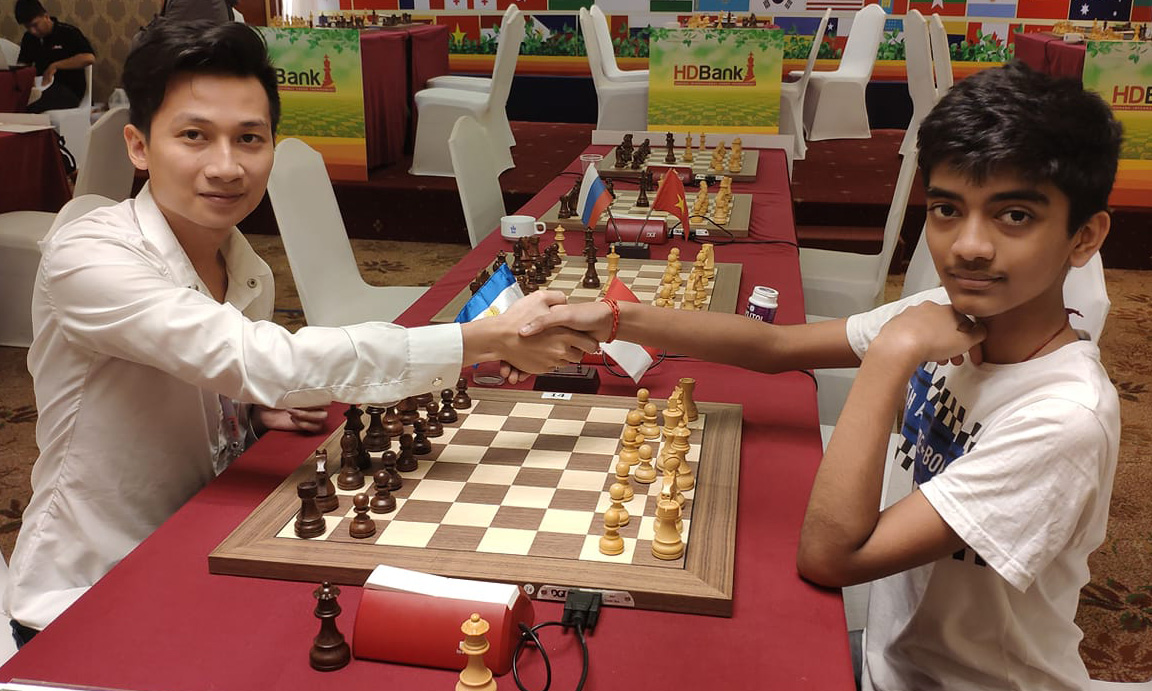
I’m Xuan Binh, the founder of Attacking Chess, and the Deputy Head of Communications at the Vietnam Chess Federation (VCF). My chess.com and lichess rating is above 2300. Send me a challenge or message via Lichess. Follow me on Twitter (X) or Facebook.